 General
Bugis Street Singapore: The Nation's Largest Street-Shopping Precinct
Bugis Street Singapore: The Nation's Largest Street-Shopping Precinct
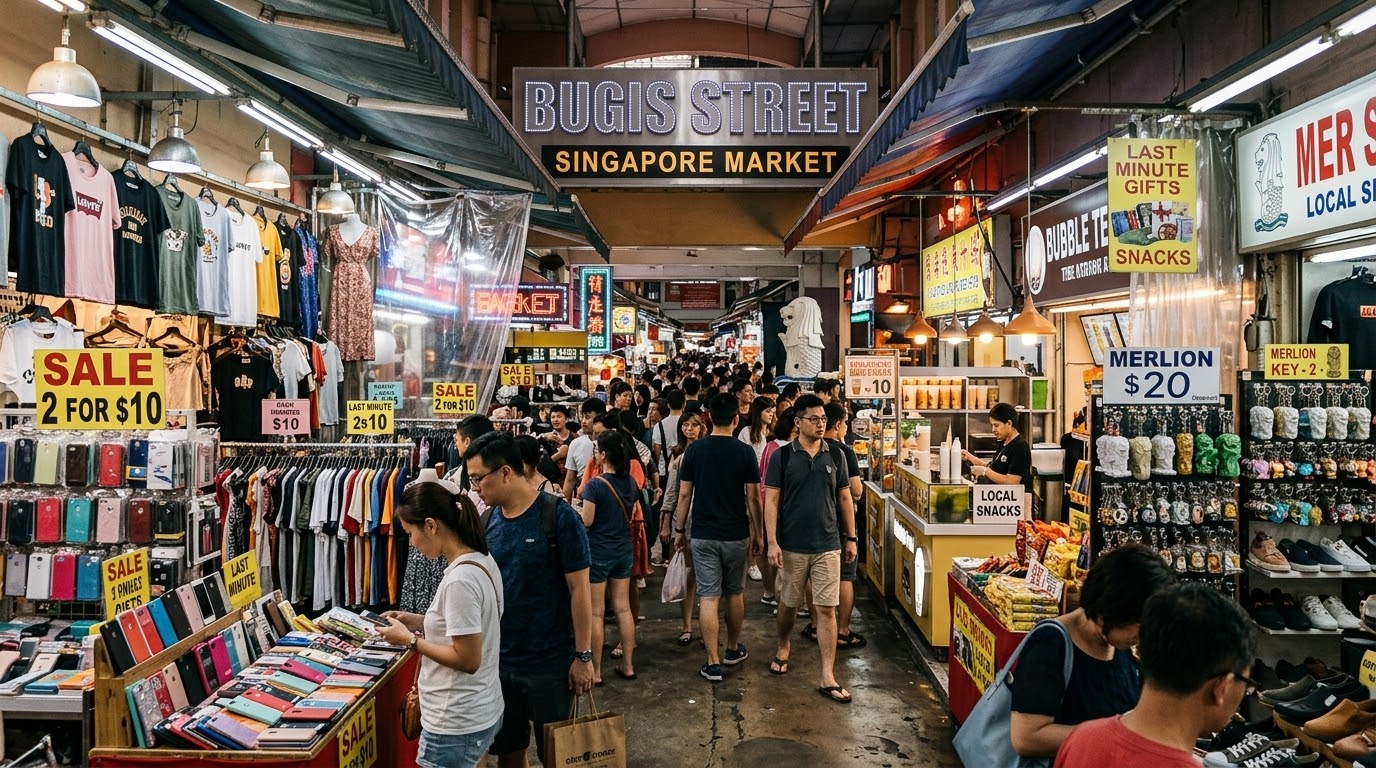
In the dense, hyper-organised commercial geography of Singapore, few retail environments carry as much cultural weight and sheer pedestrian volume as Bugis Street. Positioned in the historic Bugis district, just east of the central business district and within walking distance of the Rochor and Kampong Glam conservation areas, Bugis Street operates as the country's largest street-shopping precinct. The site draws a daily mix of tourists, cross-border shoppers from Malaysia, domestic bargain hunters, students and office workers, all navigating hundreds of stalls that sell apparel, accessories, electronics, souvenirs, cosmetics and local snacks. Its significance goes beyond square footage or vendor count. Bugis Street is a case study in how a city-state with limited land and high real-estate costs has preserved a street-market culture while layering formal retail management, tourism promotion and public transport connectivity on top of it. For a global audience accustomed to comparing retail hubs such as London's Camden Market, Dubai's Meena Bazaar, Bangkok's Chatuchak, Shanghai's Yuyuan Bazaar, Mumbai's Colaba Causeway, Lagos's Balogun Market and Nairobi's Maasai Market, Bugis Street offers a distinctly Singaporean model: dense, regulated, transit-linked and deliberately positioned as both a tourist attraction and an everyday value-retail destination. The precinct matters to international business readers because it demonstrates how street commerce can be formalised without being sterilised, and how a heritage brand can be monetised across tourism, real estate and small-enterprise ecosystems. This article examines the historical evolution, current offering, economic relevance, operational challenges and future trajectory of the precinct, using verified public information and avoiding unverifiable commercial claims. Prices are not applicable to this editorial profile, so no pricing figures are asserted.
Historical Background and Context
Bugis Street's identity is inseparable from the Bugis seafarers and traders who gave the area its name. The Bugis, a seafaring people from South Sulawesi in present-day Indonesia, were prominent maritime traders in the Malay Archipelago and established a presence in Singapore before and during the colonial era. The surrounding district became associated with shipping, commerce, lodging and entertainment, and by the mid-twentieth century Bugis Street had developed a reputation as a vibrant, sometimes raucous nightlife and street-market zone. That reputation reached international audiences through travel writing, photography and, later, film and media coverage that framed the area as an exotic, freewheeling slice of old Singapore. The social character of the street was diverse and transient, reflecting the port city's cosmopolitan makeup.

Urban renewal reshaped the area decisively. From the 1980s onward, Singapore's redevelopment programme transformed large parts of the historic Bugis district. Street hawkers and informal vendors were relocated, and the old Bugis Street market was cleared to make way for modern construction. A purpose-built complex, Bugis Junction, opened in the 1990s, integrating retail with a hotel and incorporating a covered, air-conditioned street concept that deliberately referenced the atmosphere of the original thoroughfare. The current Bugis Street market operates as an organised retail precinct within this broader development, managed as a structured environment with numbered stalls, defined aisles, lighting, security and cleaning services. This transition from informal street market to managed precinct is the central historical fact for business analysts: Singapore did not eliminate the street-shopping tradition but re-engineered it into a regulated, tourism-compatible asset.
The heritage overlay remains commercially valuable. The precinct sits within a district that includes the Sultan Mosque, the Kampong Glam conservation area, Haji Lane and Arab Street, all of which draw visitors interested in Malay-Muslim heritage, boutique retail and food. Bugis Street therefore benefits from a wider cultural tourism circuit rather than functioning as an isolated market. For international readers, the historical lesson is that street commerce can survive rapid urbanisation when it is embedded in a heritage narrative and connected to a broader destination strategy. Cities from Dubai to Berlin have experimented with regulated market halls and pedestrian retail zones, but Singapore's version is notable for its integration of heritage branding, public housing and transit planning in a single dense node.
Key Features and Offerings
The precinct's core offering is volume and variety at accessible price points. Hundreds of stalls are arranged across multiple levels and interconnected aisles, with categories that include fashion apparel for men and women, footwear, bags, costume jewellery, watches, mobile accessories, cosmetics, toys, stationery, household items, souvenirs and local snack foods. The merchandising model is heavily oriented toward fast-moving, low-ticket goods, with many vendors sourcing from regional wholesale hubs and adjusting inventory quickly to match tourist and local demand. For visitors from markets such as London, New York or Berlin, the density and price positioning resemble a permanent, indoor-adjacent street bazaar rather than a conventional shopping mall.
Several features distinguish Bugis Street from generic bargain markets. First, its location is exceptionally transit-rich. The precinct sits close to Bugis MRT station, served by two major rail lines, and is within reach of multiple bus routes and taxi stands. That connectivity converts foot traffic into retail traffic at scale. Second, the precinct is integrated with adjacent retail and hospitality assets, including Bugis Junction, Bugis+, the InterContinental hotel and surrounding shophouse businesses, creating a cluster effect that extends dwell time. Third, the market operates with formal management: stall allocation, house rules, fire-safety compliance, cleaning and security are handled systematically, which distinguishes it from unregulated street vending in many other cities. Fourth, the food and beverage layer is significant. Snack stalls, dessert shops and nearby hawker and cafe options give the precinct a leisure dimension that supports longer visits.
The customer mix is broad. Tourists from Asia, Europe and the Middle East form a substantial share of weekend and holiday footfall, drawn by guidebook listings and proximity to Kampong Glam. Domestic shoppers, including students and value-conscious families, sustain weekday traffic. Cross-border visitors from Johor and other parts of Malaysia add further volume, particularly around school holidays and festive periods. The precinct also serves as a low-barrier entry point for small entrepreneurs, including first-time stallholders, family businesses and migrant-run micro-enterprises. This combination of tourist-facing souvenir retail, everyday value fashion and small-format food service gives Bugis Street a resilience that single-category markets often lack. For global marketplace operators, the precinct illustrates the commercial value of clustering complementary categories so that a single visit satisfies multiple shopping missions.
economic impact and global relevance
Bugis Street's economic contribution operates at several levels. At the micro level, it supports hundreds of small businesses and their employees, many of them family-run or operated by entrepreneurs with limited access to conventional retail space. At the district level, it drives footfall that benefits surrounding malls, hotels, food outlets and transport operators. At the national level, it functions as a tourism asset that helps extend visitor itineraries beyond the Marina Bay and Orchard Road corridors, distributing tourist spending into the historic districts. Singapore's tourism authorities have long positioned cultural and heritage precincts as complementary to flagship attractions, and Bugis Street fits that strategy by offering an affordable, experiential counterpoint to premium retail.
The precinct's global relevance lies in its model rather than its scale. Many cities struggle to reconcile informal street commerce with public order, tax compliance and sanitation. Singapore's approach, which relocates and formalises vending within managed complexes while preserving the visual and social character of a street market, has been studied and adapted in various forms. Dubai's regulated souks, London's Borough Market and Camden, Shanghai's Yu Garden bazaar and Mumbai's redevelopment debates all engage with the same tension between heritage, commerce and modernisation. Bugis Street is a working example of a middle path: the market remains accessible to small traders, but it operates inside a framework that satisfies safety, hygiene and tourism standards. For international brands and marketplace platforms, the precinct also demonstrates the value of physical clustering in an e-commerce era. Consumers still travel to dense, discoverable retail environments for social and experiential reasons, and merchants benefit from shared foot traffic that no individual online storefront can replicate.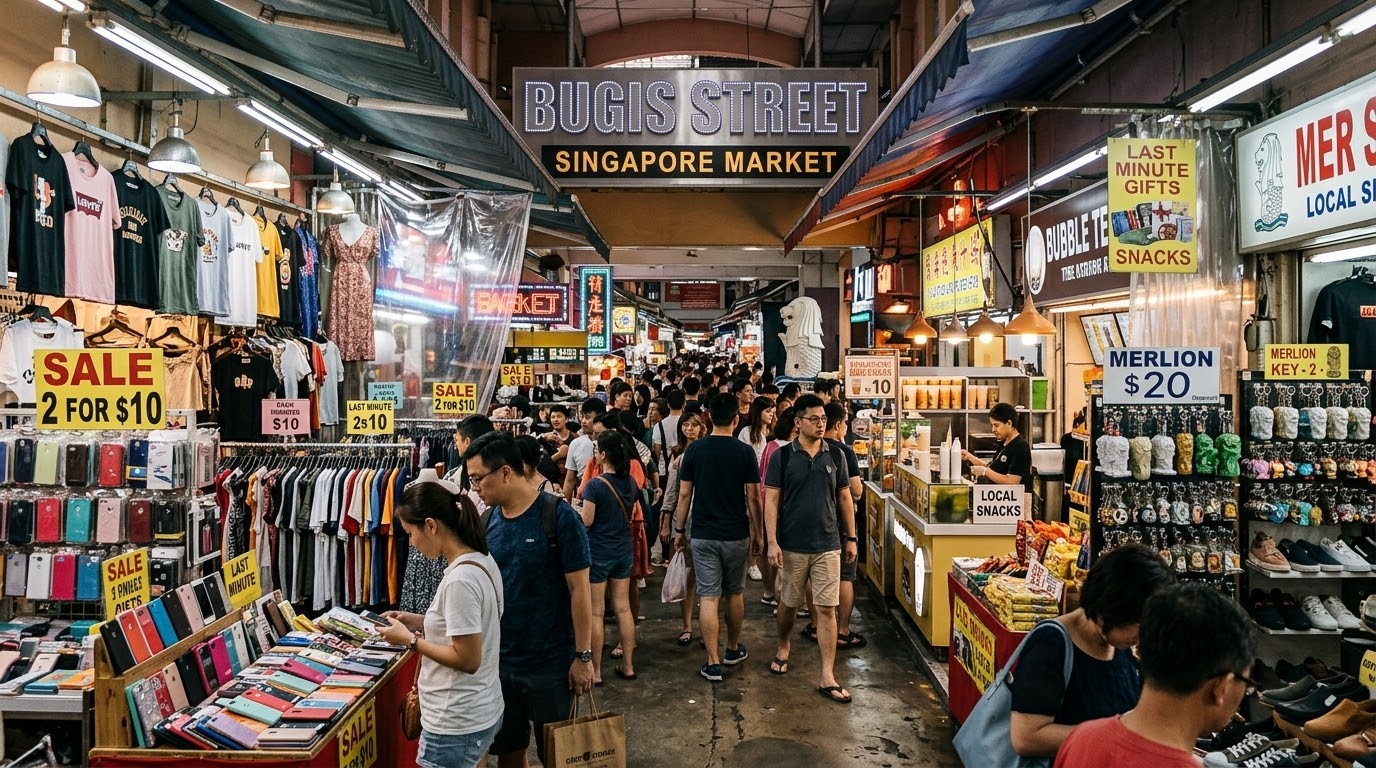
There are limits to the comparison. Bugis Street's economics are shaped by Singapore's high rents, labour rules and strong currency, which push vendors toward high-turnover, low-margin goods. The precinct is not a wholesale hub on the scale of Guangzhou or a manufacturing-linked market like those in Surat or Lagos. Its advantage is location, footfall and brand recognition. That makes it a useful reference for cities seeking to monetise heritage retail, and a cautionary example for those assuming that formalisation alone guarantees commercial success. The precinct works because transit, tourism, heritage and management align, not because street markets are inherently profitable.
challenges and solutions
Operating a large street-shopping precinct in a high-cost, densely regulated city presents persistent challenges. Rent and operating costs pressure vendors, particularly those selling low-margin apparel and souvenirs. Competition from e-commerce platforms and from air-conditioned malls in the same district is intense. Footfall is uneven, with heavy weekend and holiday peaks and quieter weekdays. Heritage authenticity is difficult to maintain as merchandise converges toward generic tourist goods. Sanitation, crowd safety and fire compliance require continuous investment. Vendors also face currency and demand shifts tied to tourism cycles and cross-border travel patterns.
| Challenge | Risk | Solution |
|---|---|---|
| High rent and operating costs | Vendor attrition and reduced merchandise diversity | Flexible stall tenure, shared services and targeted support for independent traders |
| E-commerce competition | Declining footfall and price pressure | Hybrid selling, click-and-collect partnerships and experiential merchandising |
| Uneven footfall | Revenue volatility for stallholders | Weekday promotions, event programming and corporate or school group visits |
| Generic merchandise mix | Loss of heritage distinctiveness | Curated local-design sections and links to Kampong Glam artisans |
| Crowd and fire safety | Incident risk during peak periods | Aisle management, capacity monitoring and regular safety audits |
| Sanitation and waste | Reputational and health risks | Contracted cleaning, waste segregation and vendor compliance rules |
These solutions are not theoretical. Managed precincts in Singapore and comparable markets have used flexible leasing, shared logistics and event programming to stabilise revenue. The broader lesson for global operators is that street markets require active management as a portfolio of small businesses, not simply as real estate. Cities that treat vendors as partners in curation and compliance tend to sustain diversity longer than those that rely solely on rent extraction.
Future Outlook
The future of Bugis Street will be shaped by three forces: tourism recovery and rebalancing, digital integration, and heritage-driven differentiation. Singapore's visitor economy continues to diversify toward experience-led travel, and precincts that combine food, culture and shopping are well positioned to capture spending. Bugis Street's proximity to Kampong Glam and its transit connectivity give it a structural advantage. At the same time, the precinct must respond to changing shopper behaviour, including the expectation of digital discovery, mobile payments and social-media-friendly environments. Hybrid models, in which physical stalls connect to online storefronts and delivery or collection services, are likely to expand. That shift does not eliminate the market's appeal but repositions it as a discovery layer within a broader retail ecosystem.
Heritage differentiation will matter more than ever. If Bugis Street converges toward generic souvenir merchandise, it risks losing the cultural narrative that justifies tourist visits and policy support. Curated sections featuring local designers, Malay-Muslim heritage products and food experiences tied to the district's history could strengthen its identity. Meanwhile, competition from other regional markets and from Singapore's own evolving retail landscape will keep pressure on rents and margins. The most probable trajectory is a managed evolution: continued formalisation, stronger digital integration and tighter curation, with the precinct remaining the country's largest street-shopping destination by vendor density and footfall. For international observers, Bugis Street will remain a reference case for how to keep street commerce economically viable in a high-cost city.
Conclusion
Bugis Street Singapore occupies a distinctive position in global retail geography. It is the country's largest street-shopping precinct, a heritage-branded commercial zone and a transit-linked tourism asset, all operating within one of the world's most regulated urban environments. Its history shows how a port-city market can be redeveloped without being erased, and its present shows how formal management can coexist with bargain retail and small-enterprise opportunity. The precinct's economic value extends beyond stall-level sales to district footfall, tourism spending and the wider heritage economy of the Bugis and Kampong Glam area. Its challenges, including rents, e-commerce competition and merchandise homogenisation, are shared by street markets from London to Lagos, which makes its solutions instructive. For businesses, investors and policymakers tracking urban commerce, Bugis Street offers a practical model: cluster complementary categories, connect to public transport, manage safety and sanitation actively, and treat heritage as a commercial asset rather than decoration. The precinct is not static, and its next phase will be defined by how well it integrates digital discovery with physical experience while preserving the diversity that makes street shopping worth visiting.
Put Your Brand Where Customers Are Already Searching
building a sustainable brand is only part of the job. Customers also need a convenient place to discover your products and services. TradeBasin provides businesses worldwide with an online marketplace where sellers can present products and services to buyers locally and internationally.
LIST YOUR BUSINESS OR PRODUCTS ON TRADEBASIN


