 General
Castries Market: St. Lucia's Spice and Craft Trading Hub
Castries Market: Inside St. Lucia's Enduring Caribbean Spice, Craft and Food Trading Tradition
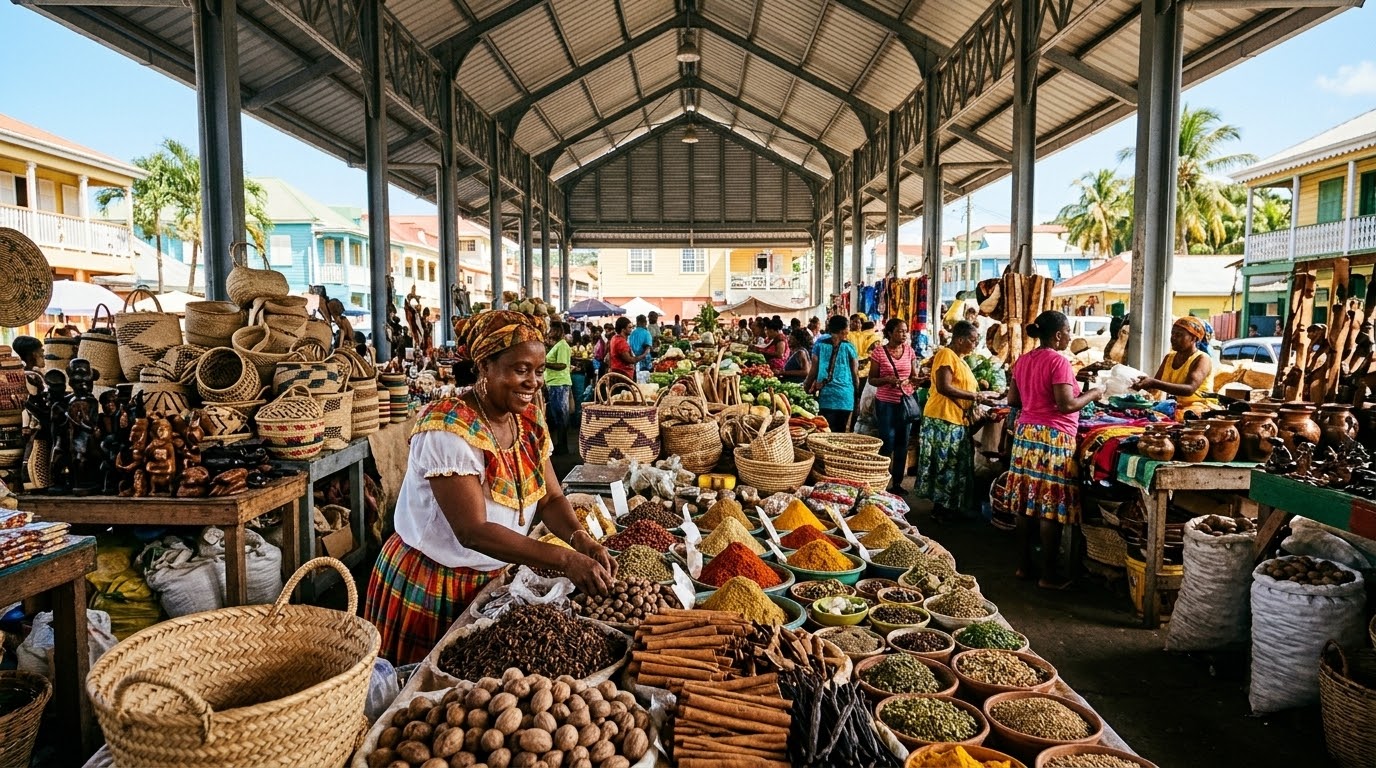
Castries Market sits at the commercial heart of St. Lucia's capital, a sprawling open-air and covered complex where spice vendors, craft artisans, fishmongers and produce farmers converge in a trading ritual that has shaped the island's economy for more than a century. For a small island state of roughly 180,000 people, the market is far more than a tourist photo opportunity. It functions as a price discovery mechanism for agricultural goods, a distribution channel for small manufacturers, a cultural archive, and a foreign-exchange earner that channels visitor spending directly into household incomes. In a global trading system increasingly dominated by containerized logistics, e-commerce platforms and cross-border digital payments, Castries Market represents a different model: dense, face-to-face, relationship-driven commerce that nonetheless connects to international supply chains and consumer trends.
The market's significance extends beyond St. Lucia's shores. Caribbean economies from Jamaica to Grenada have long relied on municipal markets as shock absorbers during tourism downturns and import-price spikes. Traders in Castries buy spices sourced regionally, sell crafts to cruise passengers from North America and Europe, and price produce in Eastern Caribbean dollars while watching fuel and shipping costs set in global hubs such as Singapore and Rotterdam. Understanding how Castries Market works offers lessons for policymakers and business owners in emerging markets from Lagos to Mumbai, where informal and semi-formal trading networks carry a large share of household income. It also offers a case study for marketplace operators in Dubai and London seeking to bridge physical and digital commerce. This article examines the market's history, its product mix, its economic footprint, its structural challenges and its prospects in a digitizing regional economy.

Historical Background and Context
Castries itself was shaped by colonial rivalry and repeated destruction. The city was founded by the French in the eighteenth century and changed hands between France and Britain fourteen times before British control was consolidated in 1814. Fires swept through the capital repeatedly, including devastating blazes in the nineteenth and twentieth centuries, and hurricanes added further disruption. A market function existed in Castries from the early colonial period, but the structure that anchors today's trading activity dates to the late nineteenth and early twentieth centuries, when a covered market building was erected to formalize produce and meat sales. The current market complex, with its distinctive Georgian-influenced architecture and cast-iron elements, evolved through successive rebuilds and renovations, including work associated with the island's post-independence modernization and later heritage-preservation efforts.
The market's development tracks St. Lucia's broader economic history. During the colonial era, the island's economy revolved around sugar, then later bananas, which became the dominant export crop in the twentieth century under preferential access to the British market. Small farmers who supplied bananas also brought surplus produce, root crops, herbs and fruit to Castries for sale, making the market a critical outlet for households that had little access to formal retail chains. When preferential banana access eroded in the 1990s and early 2000s following World Trade Organization rulings and European Union tariff reforms, rural incomes came under pressure, and the market's role as a direct-sales channel for smallholders became more important, not less.
Spices occupy a special place in this history. St. Lucia and its Windward Islands neighbors have long cultivated nutmeg, cinnamon, bay leaf, turmeric, ginger and pepper, alongside cocoa. The market became a place where vendors blended and packaged spices for local cooks and, increasingly, for visitors seeking authentic Caribbean flavors. Craft trading followed a parallel path, with straw work, wood carving, pottery and textiles rooted in African, indigenous and European traditions. The market's food stalls, meanwhile, institutionalized local cuisine, from green fig and saltfish to callaloo and freshly caught fish, turning the site into a gastronomic reference point. Across the Caribbean, similar municipal markets in Kingston, Bridgetown, Port of Spain and St. George's played comparable roles, but Castries developed a particularly strong association with spice retail and cruise-passenger craft commerce.
Key Features and Offerings
The market's layout reflects its dual identity as a daily provisioning market and a visitor-oriented retail destination. Produce sections carry seasonal fruit such as mangoes, bananas, papayas, guavas and passion fruit, alongside breadfruit, dasheen, yams, plantains and sweet potatoes. Fish and meat counters supply the capital's households and restaurants, with vendors often maintaining long-standing relationships with specific fishing communities along the island's west coast. The spice stalls are the market's signature offering: vendors sell whole and ground nutmeg, cinnamon sticks, bay leaves, turmeric, ginger, vanilla, pepper blends and cocoa products, often packaged in small quantities suited to travelers. Many vendors have developed proprietary blends and branded packaging, an informal form of product development that mirrors the private-label strategies of larger food companies.
Craft offerings span straw hats and bags, carved wooden bowls and figurines, batik and tie-dye textiles, jewelry made from local materials, and paintings depicting island life. Vendors typically combine wholesale and retail functions, sourcing from artisans across the island and sometimes from neighboring islands. Food vendors sell prepared dishes and snacks, including freshly squeezed juices, coconut water, accras, bakes and fish dishes. The market also hosts informal service providers such as porters and tour guides, and it functions as a meeting point for farmers, wholesalers, restaurateurs and hotel purchasing staff. Pricing is negotiated and highly relational; regular buyers receive informal credit and preferential rates, a system that substitutes for the formal trade finance available to larger importers and exporters.
Seasonality shapes the offering mix. Cruise-ship arrivals, concentrated in the winter months, drive craft and spice sales, while the hurricane season from June to November brings quieter periods and greater reliance on local customers. Agricultural supply fluctuates with rainfall and storm damage, and vendors adjust by sourcing from multiple parishes or importing from neighboring islands. The Eastern Caribbean dollar, pegged to the US dollar, provides currency stability that supports pricing predictability, though input costs for packaging, fuel and imported goods remain exposed to global markets. In this respect, Castries Market traders face pressures familiar to merchants in Nairobi's informal markets or Mumbai's bazaars: volatile supply, thin margins and dependence on foot traffic.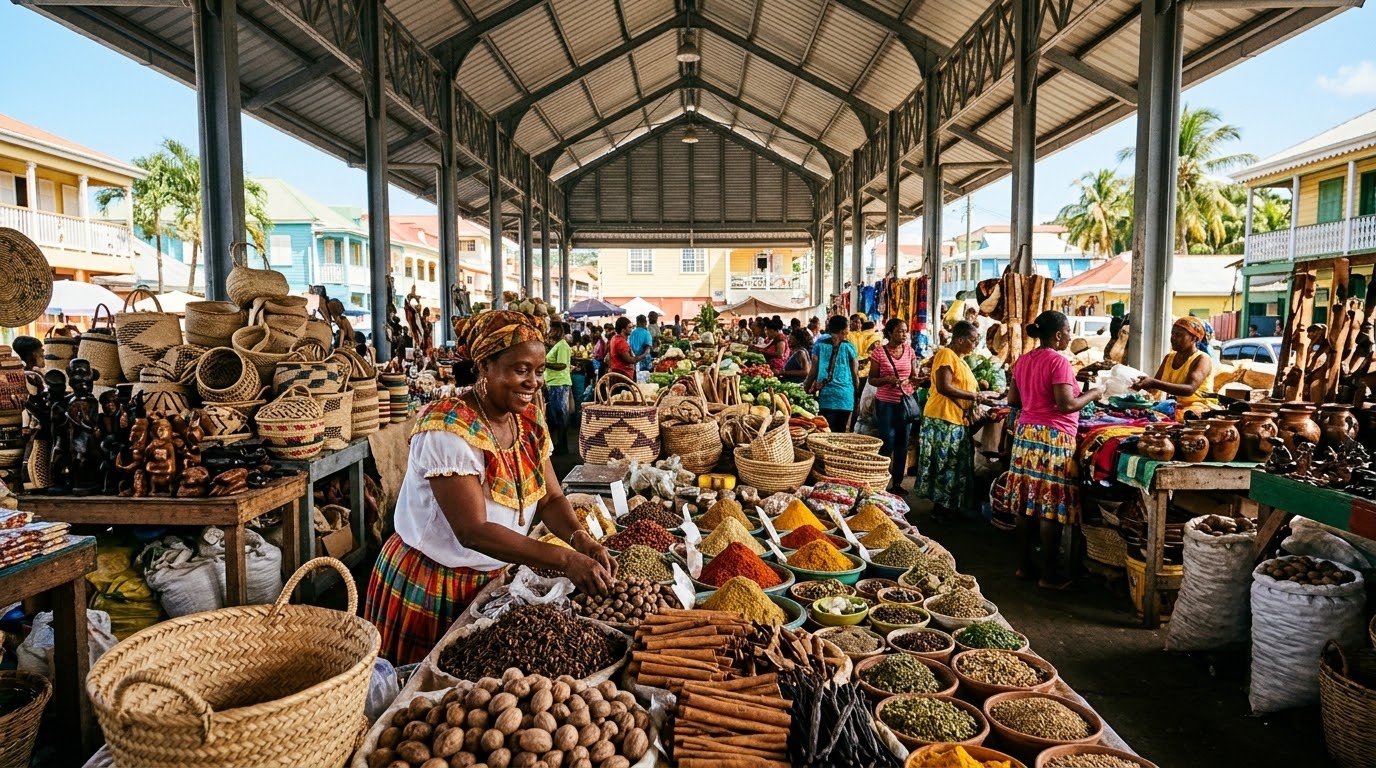
economic impact and global relevance
Tourism dominates St. Lucia's economy, contributing a large share of gross domestic product and employment, and the market captures a meaningful slice of visitor spending. Cruise passengers and stay-over tourists purchase spices, crafts and food, with spending flowing to vendors, artisans, farmers, transporters and suppliers. The multiplier effects are significant because vendors typically source locally and employ family members. For rural households, the market provides a route to cash income that does not depend on supermarket contracts or export licenses. For small food processors, it offers a low-cost testing ground for new products before they seek shelf space in hotels, duty-free shops or overseas Caribbean diaspora retailers in London, New York, Toronto and Miami.
The market's global relevance lies in what it reveals about resilient trade infrastructure. In an era when global commerce is increasingly digital and platform-mediated, Castries Market demonstrates the persistent value of physical aggregation points for small producers. Traders there perform functions that platforms struggle to replicate: quality inspection, aggregation of small volumes, price negotiation, credit provision and last-mile distribution. These are the same functions performed by traders in Dubai's gold and spice souks, Singapore's wet markets and Lagos's informal trading clusters. Development institutions and governments across Africa, Asia and Latin America have experimented with formalizing and upgrading such markets, and the Castries experience offers both successes and cautionary lessons.
Spice and craft exports also link the market to international trade flows. Caribbean spices reach diaspora communities and specialty food retailers abroad, and craft goods enter tourist luggage and, increasingly, online orders. Regional integration through CARICOM creates opportunities for intra-regional sourcing, though shipping costs and logistics constraints limit scale. The market's connection to global tourism means that demand shocks in source markets, from financial crises to pandemics, transmit quickly to vendor incomes. That exposure underscores why diversification into value-added products, branded packaged spices and e-commerce channels matters for long-term resilience. Observers in Berlin, Shanghai and other creative-economy hubs have studied how heritage markets can be repositioned as cultural destinations, and Castries fits that pattern, though commercialization risks diluting authenticity if not managed carefully.
challenges and solutions
The market faces structural constraints that limit its economic potential. Physical infrastructure requires continuous maintenance, and space is finite, creating tension between vendors, pedestrians and tour groups. Vendors operate largely in the informal sector, which restricts access to credit, insurance and business-development services. Competition from supermarkets, duty-free retail and online platforms is intensifying, particularly among younger consumers. Climate risk is acute: hurricanes and tropical storms can destroy crops, damage buildings and disrupt tourism arrivals for months. Finally, succession is a concern, as younger generations often prefer formal employment to market trading.
| Challenge | Risk | Solution |
|---|---|---|
| Aging infrastructure and limited space | Vendor displacement, safety issues, reduced visitor appeal | Phased renovation with vendor consultation, overflow trading zones, improved sanitation and shade |
| Informality and limited credit access | Low investment capacity, vulnerability to shocks | Vendor registration drives, group lending through credit unions, digital payment records to build credit history |
| Hurricane and climate exposure | Crop loss, building damage, tourism disruption | Climate-resilient roofing, crop insurance, diversified sourcing from multiple parishes and islands |
| Competition from supermarkets and e-commerce | Declining foot traffic, margin compression | Product differentiation, storytelling around provenance, online storefronts and delivery partnerships |
| Succession and skills gaps | Loss of trading knowledge, weaker vendor base | Apprenticeships, digital-skills training, youth entrepreneurship programs tied to craft and food innovation |
Several solutions are already in motion. Digital payment adoption, including card acceptance and mobile wallets, is expanding, and some vendors maintain social media presences to reach visitors before arrival. Government agencies and development partners have supported vendor training in customer service, packaging and food safety. Heritage-tourism strategies position the market within walking tours and cruise itineraries, and linkages with hotels and restaurants create steadier wholesale demand. Regional cooperation on shipping and logistics could reduce sourcing costs for both produce and craft materials. The table above summarizes the principal risks and practical responses, drawn from patterns observed across comparable Caribbean and global markets.
Future Outlook
The next decade will test whether Castries Market can modernize without losing the character that makes it distinctive. Digitization is the most visible trend. Online marketplaces, social commerce and delivery services are changing how consumers discover and buy Caribbean products, and vendors who combine physical stalls with digital storefronts are likely to capture diaspora and tourist demand more effectively. Payment infrastructure improvements, including broader card and mobile acceptance, will reduce friction for international visitors. Data from digital transactions could also give vendors and policymakers better visibility into sales patterns and demand cycles, supporting smarter inventory and sourcing decisions.
Product innovation offers another growth path. Branded spice blends, ready-to-use seasoning packs, cocoa products and heritage crafts with verifiable provenance can command higher margins than bulk commodities. Certification schemes for authenticity and origin, similar to geographical indication models used in Europe and Asia, could protect Caribbean spice and craft brands in export markets. Partnerships with hotels, cruise lines and airlines create captive retail channels, while diaspora-focused e-commerce connects the market to consumers in London, New York, Toronto and Miami. Climate adaptation will remain a binding constraint, and investment in resilient infrastructure and diversified supply will determine how quickly the market recovers from future storms. On balance, the market's future depends on treating it as economic infrastructure rather than a decorative relic, with governance, financing and skills development aligned to that view.
Conclusion
Castries Market is a working institution, not a museum piece. It aggregates small-scale production, sets prices, extends credit, transmits culture and channels tourist spending into local households. Its history reflects St. Lucia's colonial past, its agricultural transitions and its tourism-dependent present, while its daily operations reveal the mechanics of trade in a small island economy. The market's challenges, from infrastructure and informality to climate risk and competition, are shared by trading hubs across Africa, Asia and Latin America, which makes its responses instructive well beyond the Caribbean. For global businesses and investors, the lesson is that physical marketplaces remain powerful distribution and discovery channels when they adapt to digital tools and consumer expectations. For St. Lucia, the priority is to modernize carefully, preserving the relational commerce that gives the market its value while building the resilience and skills needed for the next generation of traders.
Put Your Brand Where Customers Are Already Searching
building a sustainable brand is only part of the job. Customers also need a convenient place to discover your products and services. TradeBasin provides businesses worldwide with an online marketplace where sellers can present products and services to buyers locally and internationally.
LIST YOUR BUSINESS OR PRODUCTS ON TRADEBASIN


