 General
Darajani Market: Zanzibar's Historic Spice and Trade Hub
Darajani Market Stone Town — Zanzibar’s Historic Spices, Ivory and Coastal Trade Centre
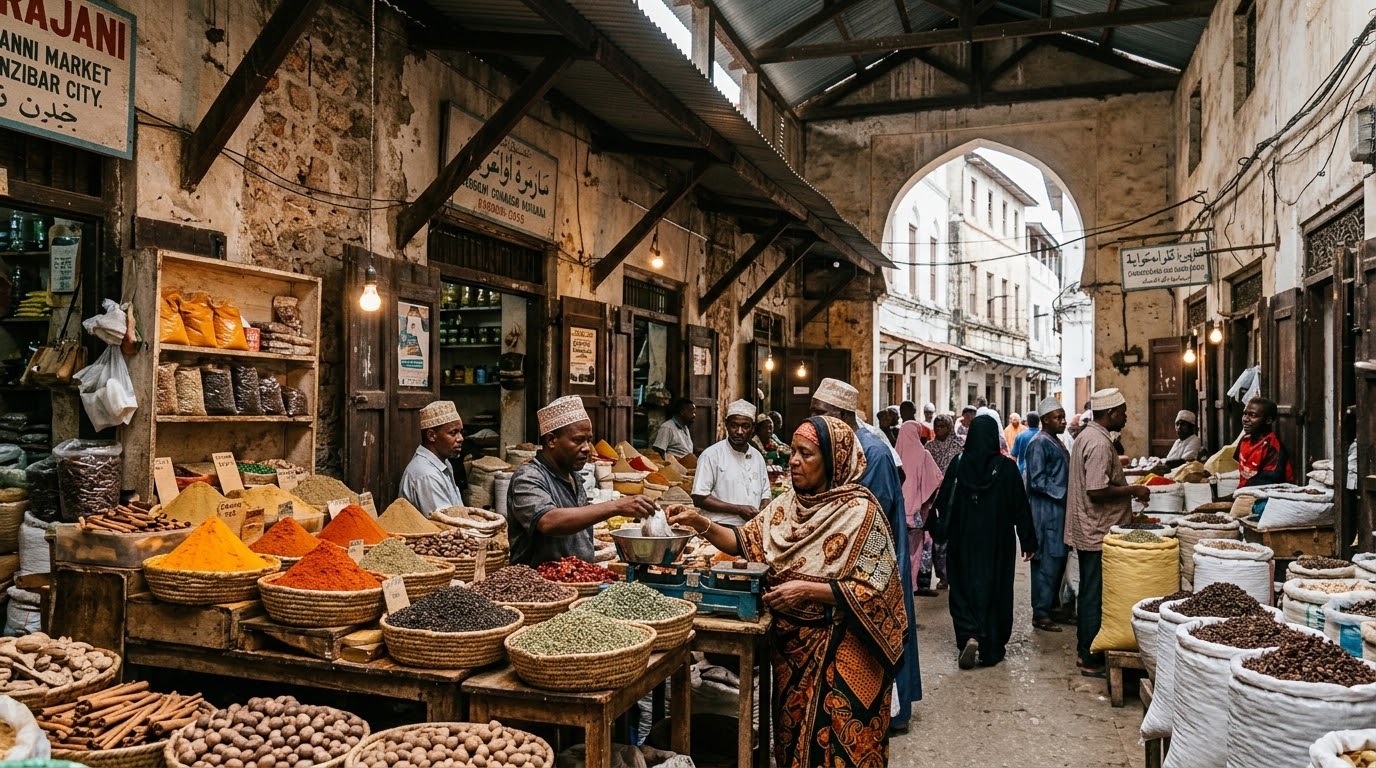
Darajani Market sits at the commercial heart of Stone Town, the historic core of Zanzibar City, and functions as one of East Africa’s most storied trading venues. For visitors arriving from Dubai, London, Singapore or Nairobi, the market offers an immediate encounter with the commodities that once made this Indian Ocean archipelago a pivot of global commerce: cloves, cinnamon, black pepper, nutmeg, cardamom and a long list of lesser-known botanicals. The market’s name derives from the Swahili word for “bridge,” a reference to the causeway that once connected the trading quarter to the surrounding neighborhoods. Today the site operates as a working wholesale and retail hub, a tourist landmark and a symbol of Zanzibar’s integration into maritime trade networks stretching from Mumbai to Mombasa and from the Arabian Peninsula to the ports of Southeast Asia.
The market is not a museum piece. It is a functioning commercial ecosystem where smallholder farmers from Pemba and Unguja bring cloves and other spices, where wholesalers negotiate bulk lots for export, and where retailers sell to residents and travelers in the same narrow aisles. Darajani’s enduring relevance matters for global supply chains because Zanzibar remains one of the world’s leading sources of cloves, a commodity used in food processing, pharmaceuticals, cosmetics and the global kretek cigarette industry centered in Indonesia. The market also anchors a broader coastal trade in dried fish, textiles, household goods and imported consumer products, making it a barometer for regional economic health. Understanding Darajani requires looking beyond the postcard image of spice pyramids and colorful stalls to the commercial mechanics, historical layering and contemporary challenges that define this landmark.

Historical Background and Context
Stone Town emerged as a trading entrepôt under the Portuguese in the sixteenth century, but its commercial ascendancy accelerated under Omani rule from the late seventeenth century onward. The Busaidi sultans relocated their court from Muscat to Zanzibar in the 1840s, and the island became the capital of an empire that controlled the East African mainland coast and the caravan routes reaching deep into the interior. Darajani grew as the principal market where goods from the interior—ivory, hides, copal, gum arabic and slaves—were exchanged for imported textiles, metalware, firearms and luxury goods from India, Arabia, Europe and the Americas. The market’s location near the waterfront and the sultan’s palace placed it at the intersection of inland supply and maritime demand, a geography that shaped the island’s commercial identity for generations.
Cloves transformed Zanzibar’s economic trajectory in the nineteenth century. Omani rulers encouraged plantation agriculture, and by the 1870s the islands of Unguja and Pemba had become the world’s dominant clove producer, a position that drew merchants from Bombay, Aden, Hamburg, Marseille and New York. The spice trade created a cosmopolitan merchant class in Stone Town, including Indian financiers who extended credit and organized export logistics, and European trading houses that connected Zanzibar to industrial markets. Darajani served as the physical point where these networks converged, with auction floors, warehouses and retail stalls clustering around the market district. The ivory trade also passed through these channels, though its scale and ethical legacy remain contested; the market’s historical association with ivory reflects a broader colonial-era commodity system that later collapsed under international bans and conservation pressure.
The twentieth century brought disruption and reinvention. The 1964 revolution ended the sultanate and reshaped property and commercial structures, while the subsequent union with Tanganyika created Tanzania. Nationalization policies affected wholesale trade, and the market’s formal export functions diminished as state marketing boards took over commodity flows. Tourism revived Darajani’s visibility from the 1990s onward, as Stone Town’s designation as a UNESCO World Heritage Site in 2000 drew international visitors. The market adapted by blending wholesale functions with retail tourism, selling packaged spices, essential oils, baskets and souvenirs alongside bulk commodities. This layered history explains why Darajani today operates simultaneously as a living market, a heritage site and a gateway for global buyers seeking authentic East African spices.
Key Features and Offerings
The market’s physical layout reflects its dual role as a wholesale depot and a retail bazaar. The main spice hall presents conical mounds of cloves, cinnamon bark, black pepper, turmeric, ginger, cardamom, cumin, coriander, chili and vanilla, alongside less familiar items such as mchicha (amaranth greens), tamarind, baobab powder and moringa. Vendors typically sell in small retail quantities to tourists and in bulk sacks to traders. Quality varies widely, and experienced buyers assess aroma, moisture content, color uniformity and foreign matter before agreeing on price. The market also offers processed spice blends, including curry powders and biryani mixes, which serve both local households and export-oriented processors.
Beyond spices, Darajani houses sections dedicated to fresh produce, meat, fish, household goods, textiles and imported consumer products. The fish section reflects Zanzibar’s coastal economy, with dried and fresh catches sold to local restaurants and regional traders. The textile stalls sell kanga and kitenge fabrics, many printed in India or China and distributed through Dubai and Mombasa. Hardware, plastics, kitchenware and electronics appear alongside traditional goods, showing how the market absorbs global manufacturing supply chains. This diversity distinguishes Darajani from single-commodity exchanges such as the Dubai Spice Souk or Singapore’s former gambier and pepper warehouses; it is a general merchandise market with a globally significant spice specialty.
For international buyers, the market functions as a sourcing gateway rather than a direct export platform. Most export transactions are intermediated by Zanzibar-based trading companies, cooperatives and processors that aggregate supply from smallholders and prepare shipments meeting destination-country standards. Darajani provides price discovery and relationship-building opportunities, but formal contracts usually require quality certification, phytosanitary documentation and logistics arrangements handled outside the market floor. The presence of Indian-origin merchant families, Tanzanian cooperatives and Gulf-based buyers creates a commercial culture where trust, credit and reputation remain central, even as digital payments and mobile money gain ground. This blend of informal negotiation and formal export infrastructure defines the market’s contemporary offering.
economic impact and global relevance
Zanzibar’s clove sector remains economically significant, with the islands producing a substantial share of global supply. Clove exports generate foreign exchange and support hundreds of thousands of smallholder livelihoods across Pemba and Unguja. Darajani acts as a visible node in this chain, even though much of the formal trade flows through state-linked marketing arrangements and private exporters. Global demand for cloves is driven by Indonesia’s kretek industry, food and beverage manufacturers, pharmaceutical companies producing eugenol-based products, and cosmetic formulators. Price volatility in cloves affects farmgate incomes and export revenues, making the market a sensitive indicator of how global commodity cycles transmit to East African producers.
The market’s relevance extends to the wider tourism economy. Stone Town attracts a significant share of Zanzibar’s visitors, and Darajani is among the most visited sites in the historic quarter. Tourist spending supports spice retailers, guides, packers and transport providers, creating employment that complements agricultural income. The market also supplies hotels and restaurants with fresh produce, meat and fish, linking rural producers to the hospitality sector. In regional terms, Darajani connects to supply chains reaching Nairobi, Mombasa, Dar es Salaam and Dubai, with imported goods arriving through Zanzibar’s ports and distributed to retailers across the archipelago. This position makes the market a microcosm of East Africa’s integration into Indian Ocean and global trade.
Comparisons with other global trading hubs are instructive. Dubai’s Spice Souk and the Deira markets serve as re-export platforms for Middle Eastern and South Asian consumers, while London’s Borough Market and Berlin’s specialty food halls cater to premium retail demand. Singapore historically functioned as a commodity entrepôt for Southeast Asian spices before shifting to higher-value logistics and finance. Darajani differs in that it remains embedded in a producing region, giving buyers proximity to origin, but it lacks the financial infrastructure, warehousing capacity and digital marketplaces found in Dubai or Singapore. Mumbai’s spice markets and Lagos’s commodity trading clusters offer closer parallels in terms of informality and scale. For global businesses, Darajani represents an origin-market opportunity that requires local partnerships and quality assurance, rather than a frictionless e-commerce channel.
challenges and solutions
Darajani faces structural challenges common to historic markets in emerging economies: infrastructure strain, quality inconsistency, fragmented supply chains, financing gaps and climate risk. The market’s narrow aisles and aging drainage struggle with peak visitor flows and heavy rains, while storage conditions for spices can compromise moisture and aroma. Smallholder farmers often lack access to improved drying, sorting and packaging technologies, which affects export-grade quality. Traders face limited access to affordable credit and hedging instruments, exposing them to price swings in global clove and pepper markets. Climate change poses longer-term risks through erratic rainfall, pest pressure and shifting growing conditions in Pemba and Unguja. 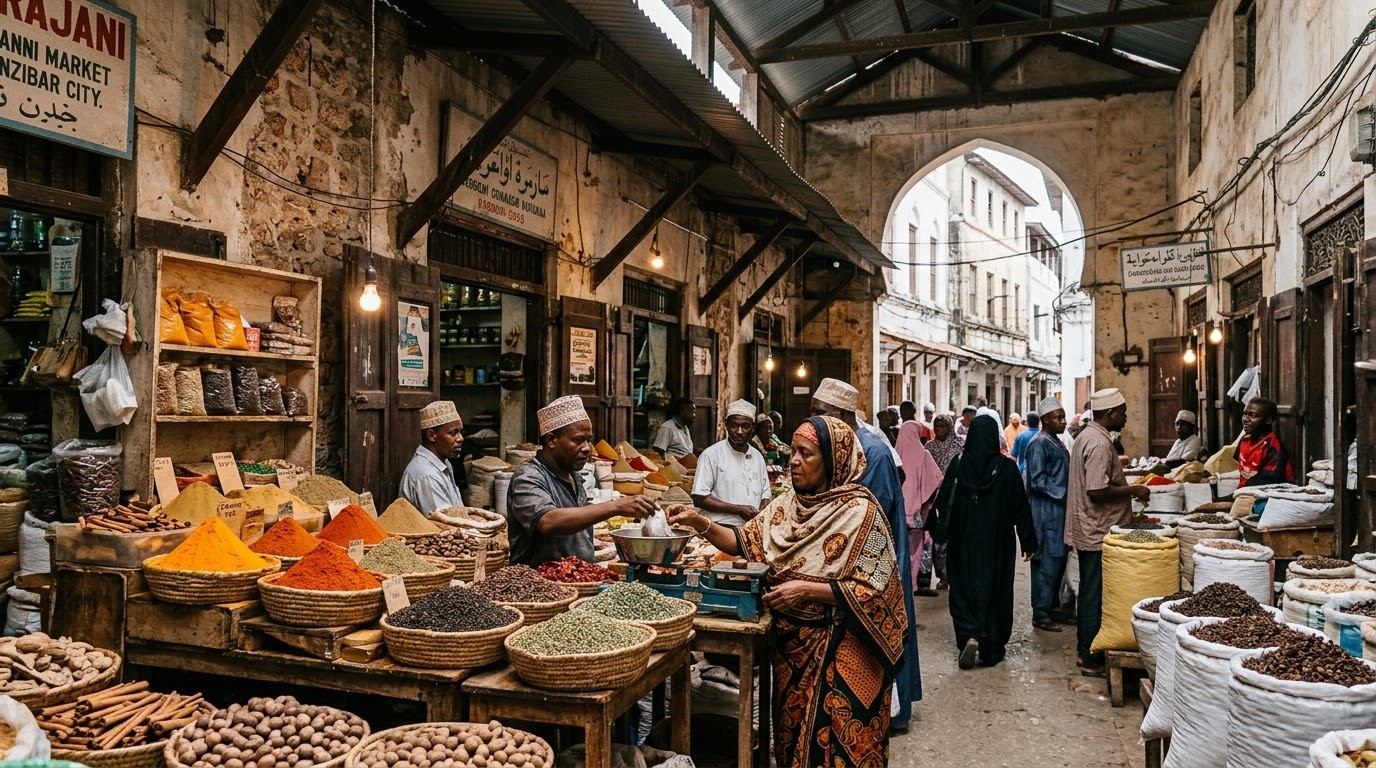
| Challenge | Risk | Solution |
|---|---|---|
| Infrastructure and congestion | Reduced visitor experience, hygiene risks, logistics delays | Phased renovation, dedicated loading zones, timed wholesale operations, drainage upgrades |
| Quality inconsistency | Export rejections, lower prices, reputational damage | Farmer training, moisture meters, centralized grading, certification support |
| Fragmented supply | Inability to meet bulk contracts, high aggregation costs | Cooperative aggregation, contract farming, digital sourcing platforms |
| Financing gaps | Price volatility losses, limited working capital | Warehouse receipt financing, export credit, mobile-based credit scoring |
| Climate variability | Yield declines, pest outbreaks, income shocks | Climate-smart agriculture, diversified crops, index-based insurance |
| Heritage-commercial tension | Over-tourism, displacement of traditional trade | Zoning rules, heritage-compatible design, community benefit-sharing |
Practical interventions are already visible. Development agencies and the Tanzanian government have supported spice sector upgrading through training, certification and market linkage programs. Mobile money and digital payments are spreading among traders, reducing cash-handling risks and enabling transaction records that support credit access. Tourism revenue can be channeled into market maintenance if governance arrangements allocate fees transparently. Exporters increasingly invest in moisture-controlled warehousing and traceability systems to meet European and North American buyer requirements. These measures do not resolve structural constraints overnight, but they show a pathway toward a more resilient market that preserves heritage while meeting modern commercial standards.
Future Outlook
Darajani’s future depends on balancing preservation with modernization. Stone Town’s UNESCO status constrains large-scale redevelopment, which protects the market’s character but complicates infrastructure upgrades. A realistic trajectory involves incremental improvements: better waste management, upgraded stalls, digital price information and clearer separation of wholesale and retail flows. Zanzibar’s broader tourism strategy aims to attract higher-spending visitors and expand beyond beach resorts, which could increase demand for authentic cultural experiences centered on the market. At the same time, over-tourism risks eroding the market’s function as a working commercial space if residential and wholesale activities are displaced by souvenir retail.
Global spice demand offers growth opportunities, particularly for organic, fair-trade and traceable products. European and North American buyers increasingly require sustainability certifications and supply chain transparency, creating incentives for Zanzibar’s producers to organize and upgrade. Digital marketplaces and business-to-business platforms can connect Darajani-based traders to buyers in dubai, London, Singapore and New York without requiring physical presence, though trust and quality verification remain essential. The market could also deepen links with Tanzania’s mainland agricultural regions, positioning itself as a distribution hub for a wider range of East African commodities. If managed well, these trends could raise incomes, improve quality and strengthen Zanzibar’s position in global spice trade.
Conclusion
Darajani Market encapsulates Zanzibar’s commercial history and its contemporary ambitions. From its origins as a bridge-linked trading quarter serving Omani, Indian, European and African merchants, it evolved through the clove boom, the ivory era, revolution and tourism revival. Today it operates as a living market where spices, fresh produce, textiles and household goods change hands, and where the legacy of coastal trade remains visible in the faces, languages and business practices of its traders. For global audiences, Darajani is more than a tourist attraction; it is an origin-market gateway to East African spices and a case study in how historic trading venues adapt to modern supply chains. Its challenges—infrastructure, quality, finance and climate—are shared by markets from Lagos to Mumbai, and its solutions will be watched by buyers, policymakers and development institutions across the Indian Ocean world.
Put Your Brand Where Customers Are Already Searching
building a sustainable brand is only part of the job. Customers also need a convenient place to discover your products and services. TradeBasin provides businesses worldwide with an online marketplace where sellers can present products and services to buyers locally and internationally.
LIST YOUR BUSINESS OR PRODUCTS ON TRADEBASIN


