 General
La Vega Central: Santiago's Fruit, Vegetable and Seafood Powerhouse
La Vega Central Market Santiago — Chile's Bustling Fruit, Vegetable and Seafood Trading Hub
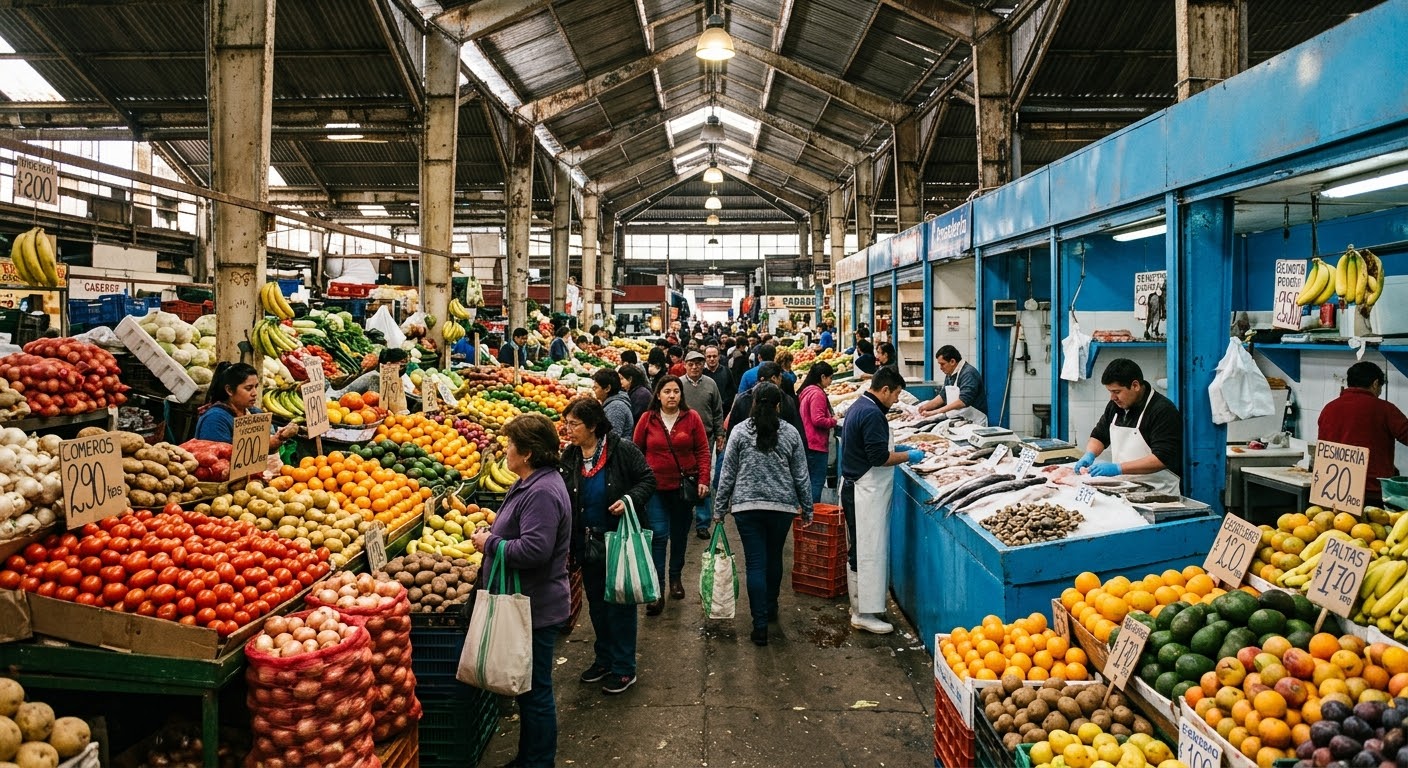
La Vega Central, tucked into the northern bank of the Mapocho River in Santiago's Recoleta district, is the single most important fresh-produce trading floor in Chile. Every morning before dawn, thousands of growers, wholesalers, retailers, chefs and price scouts converge on a sprawling complex of sheds and stalls that handles an estimated several thousand tonnes of fruit, vegetables and seafood each day. For a country that exports more than USD 18 billion of agricultural and fishery goods annually, La Vega Central functions as the domestic mirror of that export machine: a place where the price of a crate of cherries in Santiago can echo the price of a container of cherries in Shanghai, and where the availability of a Chilean sea bass fillet speaks to the health of the Pacific fishery. Global traders watching emerging-market food distribution recognise La Vega as a bellwether, comparable in function, if not scale, to Dubai's Al Aweer market, Singapore's Jurong Fishery Port, or the wholesale produce halls of Mumbai and Nairobi. This article examines La Vega Central's history, its commercial mechanics, its economic weight, and the pressures reshaping it in the 2020s.
Historical Background and Context
La Vega Central's roots reach back to the colonial era of the sixteenth and seventeenth centuries, when Santiago was a small administrative town and food trading clustered near the Plaza de Armas and the Mapocho River. As the city expanded through the nineteenth century, informal markets proliferated along the riverbank, and by the late 1800s municipal authorities had begun to formalise the trade in fresh produce. The modern La Vega Central took shape in the early twentieth century with the construction of organised market halls on the Recoleta side of the river. The location was strategic: the Mapocho crossing gave access to the agricultural hinterland to the north and south, while the nearby Estación Mapocho railway terminal, opened in 1912, allowed produce from the Central Valley to arrive by rail. That combination of river, rail and urban demand turned La Vega into the distribution spine of Santiago's food economy.

Through the twentieth century the market survived earthquakes, fires, political upheaval and repeated attempts at relocation. The military government of the 1970s and 1980s considered modernising or moving the market several times, and the return to democracy in 1990 brought new debates about hygiene, traffic and urban renewal. What has remained constant is the market's function as a price-formation venue. Chile's fruit and vegetable supply chains are notoriously fragmented on the production side, with thousands of small and medium farms in the Central Valley, the Coquimbo region and the south. La Vega Central aggregates that fragmentation, allowing a grower from Melipilla or a fisherman from Valparaíso to reach hundreds of buyers in a single morning. That aggregation role is what gives the market its staying power, and it explains why attempts to replace it with modern logistics parks have repeatedly failed to dislodge it.
The market also occupies a distinctive cultural place in Santiago. It sits beside Mercado Tirso de Molina, a smaller market focused on prepared food and household goods, and near the Mercado Central, the ornate iron-and-glass fish market that is a tourist landmark. Together these three sites form a food-trading triangle that is unusual among Latin American capitals. Unlike the Mercado Central, which has become heavily oriented toward visitors and restaurants, La Vega Central remains overwhelmingly a working wholesale and semi-wholesale market. That distinction matters for anyone analysing Chilean food distribution: La Vega is where the real volume moves, and where the prices that ripple through Santiago's neighbourhood greengrocers and supermarkets are set.
Key Features and Offerings
The commercial layout of La Vega Central is dense and layered. The main produce halls are organised by category, with distinct zones for fruit, vegetables, tubers, legumes, herbs and seafood. Buyers move through a hierarchy that runs from wholesale to semi-wholesale to retail. At the top, large wholesalers known locally as comerciantes mayoristas handle pallet-scale volumes, often receiving direct truckloads from the Central Valley or from the port of Valparaíso. Below them sit semi-wholesalers who break bulk for neighbourhood shops, restaurants and street vendors. At the base are retail stalls selling to households, often at prices that undercut supermarkets by a meaningful margin. This tiered structure allows the market to serve both a restaurant chef buying two crates of avocados and a family buying a single kilogram of tomatoes, sometimes within metres of each other.
The product range reflects Chile's extraordinary agricultural geography. The country's long, narrow shape spans desert, Mediterranean, temperate and sub-Antarctic climates, and La Vega Central draws on all of it. In summer, stone fruit from the Central Valley dominates: peaches, nectarines, plums and cherries, the latter a major export crop whose domestic surplus often appears at La Vega at attractive prices. Table grapes, blueberries, raspberries and strawberries arrive in volume. Vegetables include tomatoes, lettuce, onions, potatoes, corn, peppers and the Andean staples quinoa and potatoes in dozens of native varieties. In winter, the market shifts toward citrus, apples, pears and kiwi, alongside greenhouse vegetables. Seafood is a major draw: the market's fish and shellfish sections carry hake, sea bass, conger eel, mussels, clams, oysters, squid and, when available, abalone and loco, a prized Chilean gastropod subject to strict quota management. The presence of a dedicated seafood zone inside a produce market is a distinctive feature of the Latin American wholesale model and gives La Vega an operational complexity that pure produce halls in Berlin or London do not face.
Operationally, La Vega Central runs on an early-morning rhythm. Wholesale trading peaks between roughly 3am and 8am, when trucks unload and buyers with hand carts and small vans move through the halls. Retail activity continues through the day. The market operates seven days a week, with the heaviest activity on weekdays and Saturday mornings. Payment is still heavily cash-based, although digital payments and bank transfers have grown rapidly since 2020, driven by the adoption of contactless technology among younger vendors and by the logistical convenience of transferring funds for large orders. Cold chain infrastructure has improved but remains uneven, particularly in the seafood sections, where ice-based preservation is still common alongside refrigerated displays. That unevenness is one of the central operational issues facing the market, and it is a focus of ongoing modernisation efforts.
economic impact and global relevance
La Vega Central's economic footprint extends well beyond the stalls themselves. The market supports thousands of direct jobs in trading, handling, transport, cleaning, security and food service, and an estimated larger number of indirect livelihoods among growers, fishermen, truck drivers and small retailers who depend on it as their primary sales channel. For small and medium farms in Chile, which make up a substantial share of national agricultural production, La Vega offers a route to market that does not require the scale, certification and contractual arrangements demanded by supermarket chains or export buyers. That function is economically significant: it keeps smallholders commercially viable and provides a price-discovery mechanism that is transparent in a way that contract farming often is not.
Globally, La Vega Central matters because it is a barometer for Chilean food supply and demand. Chile is a major global supplier of fruit, wine, salmon and seafood, and its domestic market conditions influence export flows. When domestic prices for a crop fall sharply at La Vega, exporters may redirect volumes to international buyers; when domestic prices spike, export allocations can tighten. Traders in Shanghai, Rotterdam, Dubai and New York who follow Chilean produce understand that La Vega's price signals, alongside those from the wholesale markets of Santiago and the port of Valparaíso, provide an early read on supply conditions. The market is also a reference point for food-security analysts studying Latin America, because it demonstrates how a middle-income country with a sophisticated export sector still relies on traditional wholesale markets for domestic distribution. That duality — world-class export logistics alongside a cash-based, semi-informal domestic market — is a defining feature of the Chilean food economy and a recurring theme in comparative studies of markets in Nairobi, Lagos and Mumbai.
The market's global relevance also runs through Chile's trade agreements. Chile has free trade agreements with the United States, the European Union, China, Japan, South Korea and members of the Comprehensive and Progressive Agreement for Trans-Pacific Partnership, among others. Those agreements have expanded export opportunities for Chilean produce, which in turn shapes what appears at La Vega. A strong export season for cherries to China, for example, can tighten domestic supply and lift prices; a weak export season can flood the domestic market. For international buyers and analysts, La Vega is therefore a useful window into how global trade policy and demand shocks transmit into a domestic food system. The market's role in supplying Santiago's restaurant sector, which has gained international recognition in recent years, adds a further layer: La Vega is part of the supply chain behind Chile's growing gastronomic reputation, connecting Andean ingredients to chefs who present them to international audiences.
challenges and solutions
La Vega Central faces a set of structural challenges that are common to traditional wholesale markets worldwide, compounded by Santiago's specific urban pressures. The most persistent is infrastructure ageing. Many of the market's buildings date from the early and mid-twentieth century, and while renovations have occurred, the site struggles with drainage, refrigeration, waste management and traffic circulation. The surrounding Recoleta district has become congested, and truck access conflicts with residential and commercial traffic. A second challenge is food safety and traceability. Chile's export sector operates under stringent certification regimes, but domestic wholesale trade is less tightly regulated, and the market's seafood sections in particular require stronger cold-chain discipline. Third, the market faces competition from modern distribution: supermarket chains and food-service distributors have built their own supply networks, bypassing La Vega for large contracts.
Fourth, digitalisation is uneven. Some vendors use apps and digital payments, while others remain cash-only, creating friction for buyers and limiting the market's ability to capture data. Fifth, labour conditions and informality are persistent concerns, with some workers operating outside formal employment arrangements. Sixth, urban development pressure is intense: Recoleta has attracted real estate investment, and the market's large land footprint makes it a target for redevelopment proposals. Finally, climate change poses a supply-side risk, with drought in central Chile affecting fruit and vegetable volumes and altering the seasonal patterns on which traders depend.
| Challenge | Risk | Solution |
|---|---|---|
| Ageing infrastructure and congestion | Rising handling costs, spoilage, safety incidents | Phased renovation, dedicated logistics windows, traffic management with municipal authorities |
| Cold-chain gaps in seafood | Food safety failures, reputational damage | Investment in refrigeration, ice-supply reliability, hygiene training and inspection |
| Competition from modern distributors | Loss of high-volume buyers, margin compression | Strengthen semi-wholesale services, aggregation for small farms, value-added processing |
| Uneven digitalisation | Data gaps, payment friction, exclusion of younger buyers | Digital payment pilots, vendor training, simple inventory and ordering tools |
| Labour informality | Regulatory exposure, worker vulnerability | Formalisation programmes, social security enrolment, sector dialogue |
| Urban development pressure | Relocation or land loss | Heritage and food-security designation, master planning with trader associations |
| Climate-driven supply volatility | Price spikes, product shortages | Diversified sourcing, water-efficiency support for growers, contingency planning |
Solutions are emerging, if slowly. Trader associations have engaged with municipal and national authorities on renovation plans, and there have been targeted investments in waste management and lighting. Digital payment adoption accelerated after 2020, and some vendors now use mobile ordering to serve restaurant clients. Cold-chain improvements are underway in the seafood sections, supported by a broader national push to strengthen domestic food safety. The most promising strategic response is to reposition La Vega as a hub for small-farm aggregation and value-added services, rather than trying to compete head-on with supermarket logistics. That approach aligns with global best practice: markets in Singapore, the Netherlands and Spain have survived modernisation by specialising in freshness, variety, small-lot flexibility and proximity to urban food culture. La Vega's location, brand recognition and deep supplier relationships give it a genuine advantage in those areas.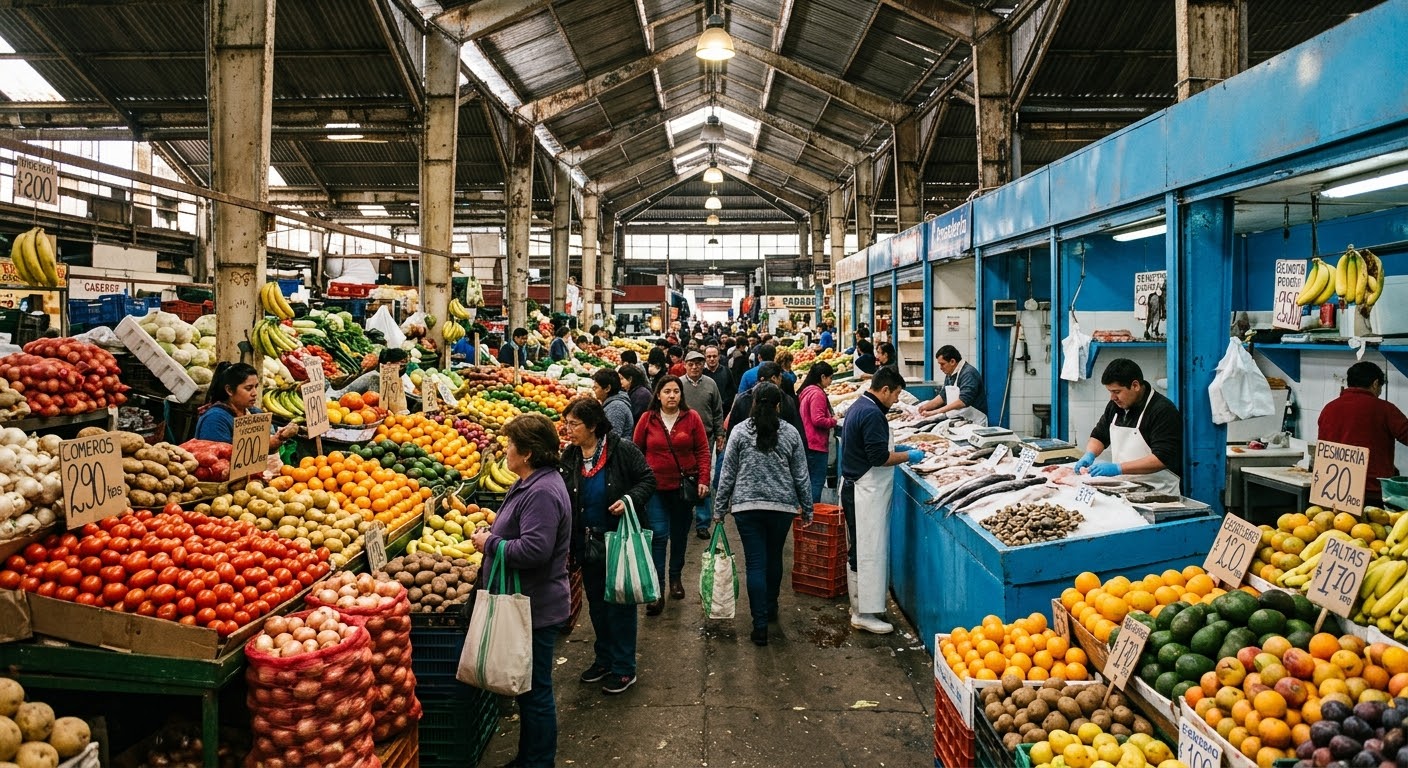
Future Outlook
The next decade will determine whether La Vega Central modernises in place or gradually loses ground to newer distribution channels. Several factors favour renewal. Santiago's population continues to grow, and demand for fresh, affordable produce remains strong, particularly among lower- and middle-income households for whom the market is the primary source of fruit and vegetables. Chile's gastronomic reputation is rising, and chefs increasingly source specialty ingredients through La Vega, giving the market a quality-driven client base. Public policy has also shifted: food security and local food systems have gained prominence in national debate, and there is growing recognition that traditional markets provide resilience that concentrated retail networks do not. International development institutions, including those working across Latin America, have emphasised the role of wholesale markets in urban food security, and that framing strengthens the case for investment.
The risks are equally real. If infrastructure upgrades stall, congestion and hygiene problems will push more buyers toward modern distributors. If digitalisation remains fragmented, the market will struggle to serve younger buyers and restaurant clients who expect digital ordering and invoicing. If urban development pressure prevails, the market could be displaced, with consequences for thousands of small suppliers. The most likely outcome is a gradual, partial modernisation: improved cold chain, wider digital payments, better waste management and stronger integration with restaurant and small-retail supply chains, while the market retains its character as a dense, cash-friendly, high-variety trading floor. For global observers, La Vega Central will remain a valuable case study in how traditional markets adapt to modern food systems, and a reliable indicator of Chilean agricultural and fishery conditions.
Conclusion
La Vega Central is more than a market. It is the operational centre of Chile's domestic fresh-food economy, a price-formation venue, a livelihood for thousands of small producers and traders, and a cultural institution in Santiago. Its history reflects the broader story of Chilean agriculture: a long, geographically diverse country that became a global export powerhouse while retaining a traditional, relationship-driven domestic distribution system. Its present challenges — infrastructure, cold chain, digitalisation, competition and urban pressure — are the same challenges facing wholesale markets in Nairobi, Mumbai, Lagos and beyond, which makes La Vega a useful reference point for anyone studying food distribution in emerging and middle-income economies. Its future depends on whether traders, authorities and investors can modernise the market without destroying the flexibility and variety that make it valuable. For international buyers, analysts and food businesses, La Vega Central deserves attention not only as a Chilean institution but as a living example of how traditional markets remain indispensable in a globalised food system.
Put Your Brand Where Customers Are Already Searching
building a sustainable brand is only part of the job. Customers also need a convenient place to discover your products and services. TradeBasin provides businesses worldwide with an online marketplace where sellers can present products and services to buyers locally and internationally.
LIST YOUR BUSINESS OR PRODUCTS ON TRADEBASIN


