 General
Mercado de Sonora: Mexico City's Herbal and Curio Bazaar
Mercado de Sonora: Mexico City's Herbal and Curio Bazaar
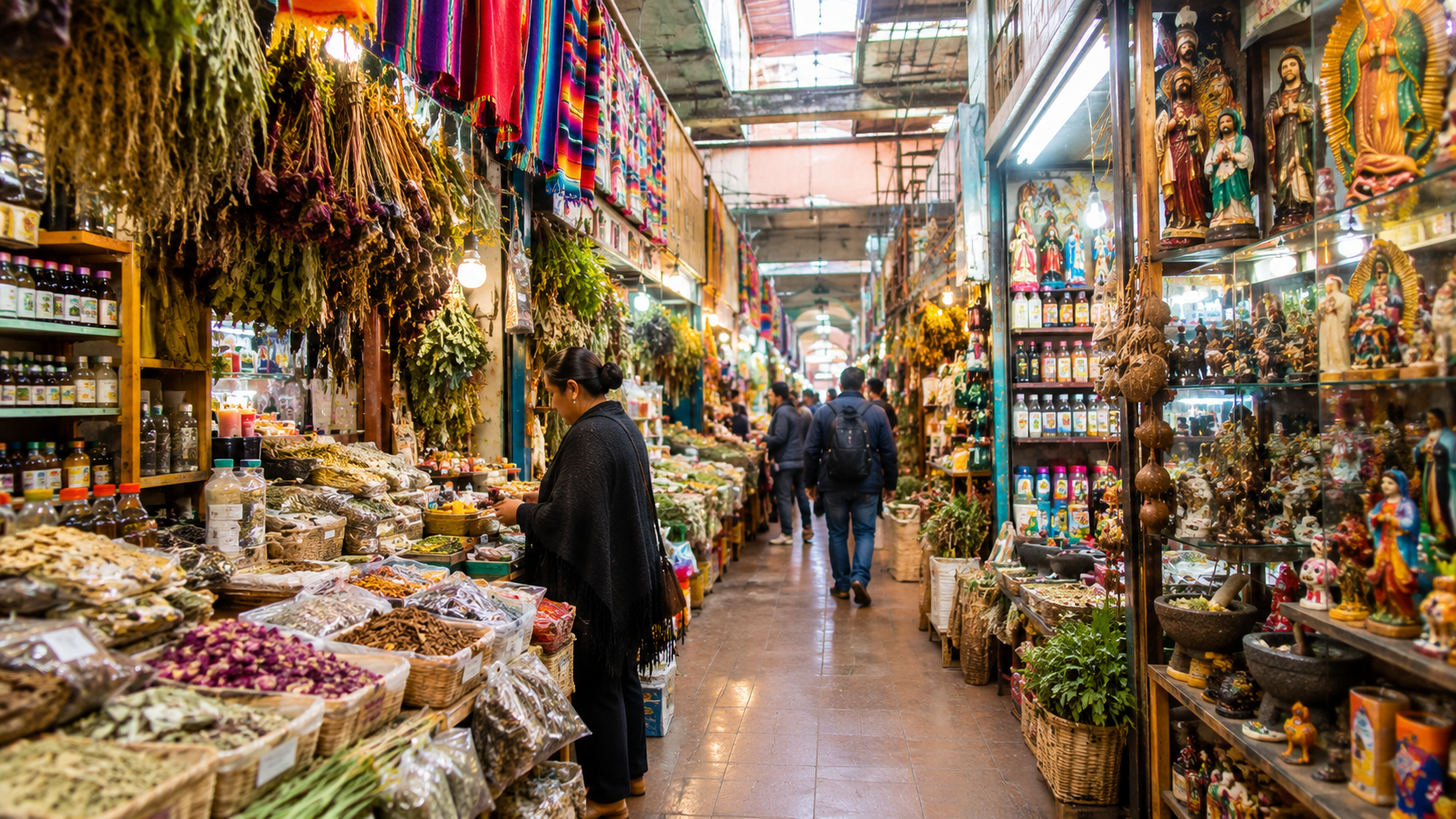
Few retail spaces on earth compress as much cultural information into as few square meters as Mercado de Sonora in Mexico City. Located in the Venustiano Carranza borough, east of the historic center, the market is best known internationally as a hub for medicinal herbs, ritual and curiosity goods, and cut flowers, but its real significance runs deeper than the postcard image of dried bundles and candles. Mercado de Sonora functions as a wholesale and retail node in a supply chain that stretches from the cut-flower greenhouses of the State of Mexico and Puebla to the herb collectors of the Sierra Norte, and outward again to diaspora communities, boutique wellness brands, and cultural researchers in cities as distant as London, Berlin, and Shanghai. For a global audience of traders, importers, and product developers, the market offers a working case study in how informal heritage commerce coexists with formal urban regulation, tourism economics, and the growing international demand for botanical and traditional-medicine products. The site is not a museum piece. It is a functioning market with fixed stalls, daily price negotiations, cold-chain constraints, and a customer base that includes both local households and foreign visitors. Understanding Mercado de Sonora requires separating its commercial mechanics from its folklore reputation, and then examining how the two reinforce each other in a city that hosts one of the largest wholesale market systems in the Western Hemisphere. This article examines the market's history, its product categories, its economic footprint, its structural challenges, and the forces likely to shape its next decade.
Historical Background and Urban Context
Mercado de Sonora sits within a broader network of public markets that define Mexico City's food and goods distribution. The modern market building opened in the mid-twentieth century as part of a municipal push to relocate and formalize street commerce, and it was designed from the outset to handle high-volume flower and plant trade alongside smaller stalls selling prepared goods. Over subsequent decades, the market's identity shifted toward herbs, esoteric products, and folk religious supplies, a specialization that reflects both consumer demand and the regulatory environment. Mexico has a long documented tradition of herbal medicine rooted in pre-Hispanic botanical knowledge and later syncretic practices, and markets have historically served as the distribution layer for that knowledge. Mercado de Sonora became the most visible urban expression of that layer, attracting vendors who specialized in dried plants, resins, seeds, tinctures, soaps, candles, and amulet-style objects.

The market's location matters commercially. Venustiano Carranza is adjacent to the historic center and connected to major arterial roads and public transport corridors, which allows early-morning flower deliveries to arrive before retail hours and lets wholesale buyers move goods quickly toward other neighborhoods. Mexico City's wholesale market system, anchored by the enormous Central de Abasto, supplies thousands of smaller retailers, and Mercado de Sonora operates as one of the specialized spokes in that system. Flower supply chains, in particular, are time-sensitive: cut stems must move from greenhouse to cold storage to stall within hours, and the market's layout and logistics reflect that pressure. The herb and curiosity trade is less perishable but more fragmented, with sourcing spread across small producers, regional markets, and importers. This dual structure, perishable flowers on one side and semi-durable botanicals and curios on the other, gives the market unusual resilience because the two product families respond to different demand cycles.
Internationally, comparable heritage markets in Istanbul, Marrakesh, Cairo, and Mumbai have faced similar pressures from urbanization and e-commerce, and many have been studied as models of cultural tourism. Mercado de Sonora differs in that its esoteric reputation carries a strong brand effect that draws visitors, yet that same reputation creates regulatory and reputational risk. The market has been the subject of repeated media coverage focused on ritual practices and animal-related products, which has prompted municipal scrutiny and periodic enforcement actions. That tension between cultural continuity and public-order regulation is central to understanding the market's trajectory and its appeal to outside observers.
Key Features, Product Categories and Offerings
The market's product mix can be grouped into four broad categories, each with distinct supply chains and buyer profiles. The first is cut flowers and ornamental plants, which occupy a large share of floor space and generate the highest daily turnover. Stems arrive from production zones in the State of Mexico and Puebla, and the range includes roses, carnations, chrysanthemums, lilies, and seasonal varieties tied to religious and civic calendars. Demand spikes around Mother's Day, Day of the Dead, and the December holiday season, creating predictable inventory cycles that wholesalers plan around. The second category is dried and fresh medicinal herbs, sold in loose bundles, powders, and prepared mixtures. Vendors stock plants used in traditional preparations for digestive, respiratory, and inflammatory complaints, alongside culinary herbs. This segment overlaps with the broader Latin American herbal trade and connects to export demand from wellness and natural-product brands.
The third category covers ritual, religious, and curiosity goods: candles, resins, incense, oils, soaps, seeds, amulets, figurines, and printed materials tied to folk devotion and esoteric practice. This is the segment that generates the most international media attention and the most tourist foot traffic. Vendors describe these products in cultural and devotional terms, and the market functions as a supply point for practitioners and households across the city. The fourth category is a mixed assortment of household and specialty items, including natural cosmetics, cleaning preparations, and small tools, which broadens the customer base beyond ritual buyers.
From a merchandising standpoint, the market's layout rewards navigation knowledge. Stalls are organized by corridor and by vendor lineage, and many businesses have operated in the same family for decades. Pricing is negotiated at the stall level, with wholesale discounts available for bulk herb and flower purchases. Buyers sourcing for export should note that product standardization is limited: bundle weights, grades, and labeling vary, and documentation for phytosanitary compliance is not uniformly available at the point of sale. That gap is precisely where intermediaries and aggregators add value, and it explains why the market's export footprint runs through consolidators rather than direct stall-to-buyer transactions. For cultural buyers, the market's authenticity is its core asset; for commercial buyers, that same informality is the primary operational hurdle.
economic impact and global relevance
Mercado de Sonora's economic contribution operates at three levels: direct employment in stalls and logistics, indirect employment in cultivation and transport, and induced spending in surrounding commerce. The market supports hundreds of vendor units and associated jobs in loading, cleaning, security, and food service. Flower supply chains alone involve growers, cutters, packers, drivers, and cold-storage operators, and the market's early-morning wholesale activity anchors a wider cluster of small businesses in Venustiano Carranza. For Mexico City's municipal economy, public markets remain a significant retail channel, and specialized markets like Sonora contribute to the city's identity as a commercial and cultural destination.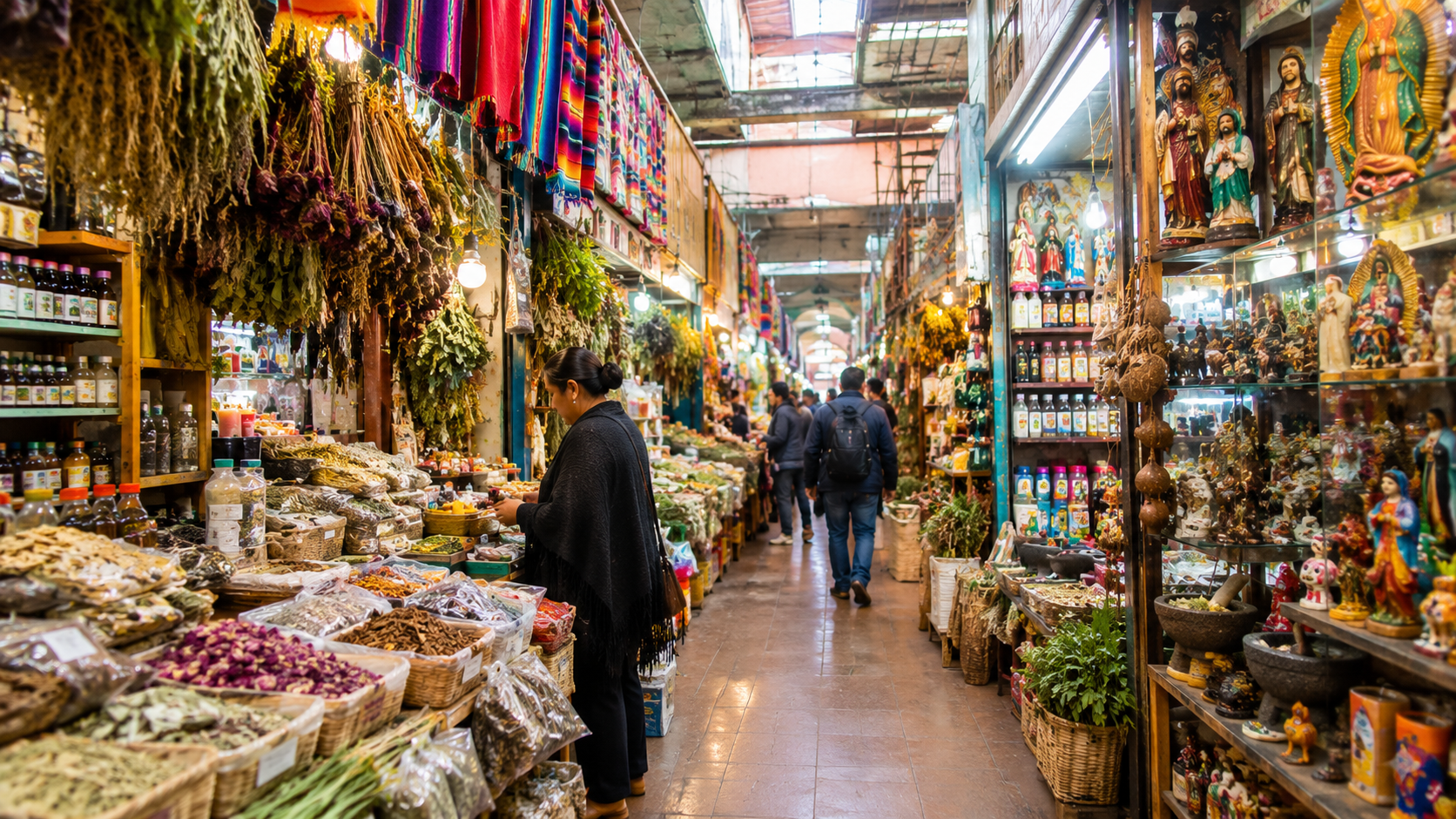
Global relevance runs through three channels. The first is the international natural-products and wellness market, where demand for botanical ingredients and traditional preparations has grown steadily, particularly in North America and Europe. Buyers in London, Berlin, and New York source through aggregators who in turn draw on markets like Sonora, and the market's herb vendors are therefore indirectly connected to global supply chains. The second channel is cultural tourism. Mexico City has become one of the most visited urban destinations in the Americas, and markets are part of the visitor itinerary. Tourists from Singapore, Dubai, and other high-income hubs increasingly seek experiential retail, and the market's reputation as a curiosity destination gives it a durable pull. The third channel is diaspora commerce. Mexican communities in the United States and elsewhere maintain demand for ritual and herbal goods, and remittance-linked purchasing supports vendors who stock culturally specific items.
Comparisons with other global hubs are instructive. Dubai's spice and gold souks and Singapore's heritage retail districts have professionalized their visitor experience through signage, payment systems, and quality standards while preserving atmosphere. Mercado de Sonora has not undergone that transformation at scale, and the resulting gap represents both risk and opportunity. Vendors who adopt digital payments, bilingual labeling, and traceable sourcing can capture higher-value buyers, while the market as a whole retains its authenticity premium. For international traders, the lesson is that heritage markets can be commercially upgraded without being homogenized, provided that regulation and investment respect the existing vendor ecosystem.
Challenges and Practical Solutions
The market faces structural constraints that are common to heritage retail districts worldwide, compounded by the specific sensitivities of its product mix. Regulation of animal-related and ritual products has tightened, and enforcement actions create uncertainty for vendors. Flower logistics face cold-chain losses and seasonal price volatility. Digital competition from e-commerce platforms pressures margins on standardized goods. Reputational risk from sensational media coverage can deter institutional buyers and tourism partners. The table below summarizes the principal challenges, the risks they create, and practical responses observed in comparable markets.
| Challenge | Risk | Solution |
|---|---|---|
| Regulatory scrutiny of ritual and animal-related products | Enforcement actions, inventory seizure, reputational damage | Vendor compliance training, clear product labeling, cooperation with municipal authorities, and substitution toward plant-based and craft alternatives |
| Cold-chain losses in cut flowers | Shrinkage, price volatility, reduced margins | Shared cold storage, early-morning logistics coordination, and pre-order systems tied to calendar demand peaks |
| Limited product standardization | Barriers to export and institutional supply contracts | Aggregator-led grading, bundle standardization, and phytosanitary documentation support |
| Digital payment gaps | Lost sales to tourists and younger local buyers | Stall-level card and QR payment adoption, supported by municipal or association programs |
| Reputational stereotyping in media | Deterrence of cultural and institutional partners | Narrative control through documented cultural programming, guided visits, and partnerships with universities and museums |
| Space and infrastructure constraints | Congestion, safety issues, limited growth capacity | Phased renovation, corridor management, and dedicated wholesale windows outside retail hours |
Each solution requires coordination between vendors, market associations, and municipal agencies. Experience from Istanbul's Grand Bazaar and Singapore's heritage districts suggests that incremental, vendor-led upgrades outperform top-down redevelopment, which tends to displace the businesses that give a market its character. For Mercado de Sonora, the most immediate gains are likely to come from payment digitization and flower logistics, both of which address measurable losses without altering the market's cultural identity.
Future Outlook
The next decade will test whether Mercado de Sonora can professionalize its commercial layer while preserving its cultural authority. Three trends are likely to dominate. First, the international wellness and natural-products market will continue to expand, creating demand for traceable botanical ingredients. If aggregators can build documented supply relationships with vendors, the market could become a recognized origin point for specific herbs and preparations, similar to how specialty coffee and cacao origins have been branded. Second, tourism will remain a growth channel, but visitor expectations are rising. Markets that offer clear signage, digital payments, and curated cultural experiences will capture higher spending per visitor. Third, regulation will continue to shape the product mix, pushing vendors toward plant-based, craft, and clearly labeled goods.
Technology adoption is the swing factor. Digital payment acceptance, inventory tracking, and online storefronts can connect stalls to buyers in dubai, Singapore, and London without requiring physical expansion. Marketplace platforms and social commerce already allow small vendors to reach diaspora customers, and that channel is likely to grow. The risk is that digital intermediaries capture value that currently stays with vendors, which is why cooperative or association-led platforms may be more sustainable than purely private ones. Infrastructure investment, particularly cold storage and corridor management, will determine whether flower trade volumes grow or migrate to other markets.
For global traders and cultural institutions, the market's trajectory offers a template. Heritage commerce can be upgraded through incremental, vendor-centered interventions, and the resulting model can serve as a reference for markets in Lagos, Nairobi, and Mumbai facing similar pressures. The key variable is governance: markets that organize collectively negotiate regulation and investment more effectively than fragmented vendor populations.
Conclusion
Mercado de Sonora is more than a tourist curiosity. It is a functioning commercial ecosystem that links growers, collectors, vendors, and buyers across Mexico and, indirectly, across the world. Its flower trade and herb stalls generate daily economic activity, while its ritual and curiosity goods carry cultural knowledge that has commercial and scholarly value. The market's challenges, from regulation to logistics to digital adoption, are shared by heritage markets globally, and its responses will be watched by traders and policymakers alike. For international buyers, the market represents an opportunity to source culturally authentic products with proper documentation and partnership. For the city, it represents a retail asset that rewards careful stewardship. The balance between authenticity and professionalization will determine whether Mercado de Sonora remains a living market or becomes a staged experience, and that balance is worth monitoring closely.
Put Your Brand Where Customers Are Already Searching
building a sustainable brand is only part of the job. Customers also need a convenient place to discover your products and services. TradeBasin provides businesses worldwide with an online marketplace where sellers can present products and services to buyers locally and internationally.
LIST YOUR BUSINESS OR PRODUCTS ON TRADEBASIN


