 General
Kano Kurmi Market: Leather, Dyeing and Trans-Saharan Trade
Kano Kurmi Market: A Living Archive of Leather, Dyeing and Trans-Saharan Commerce
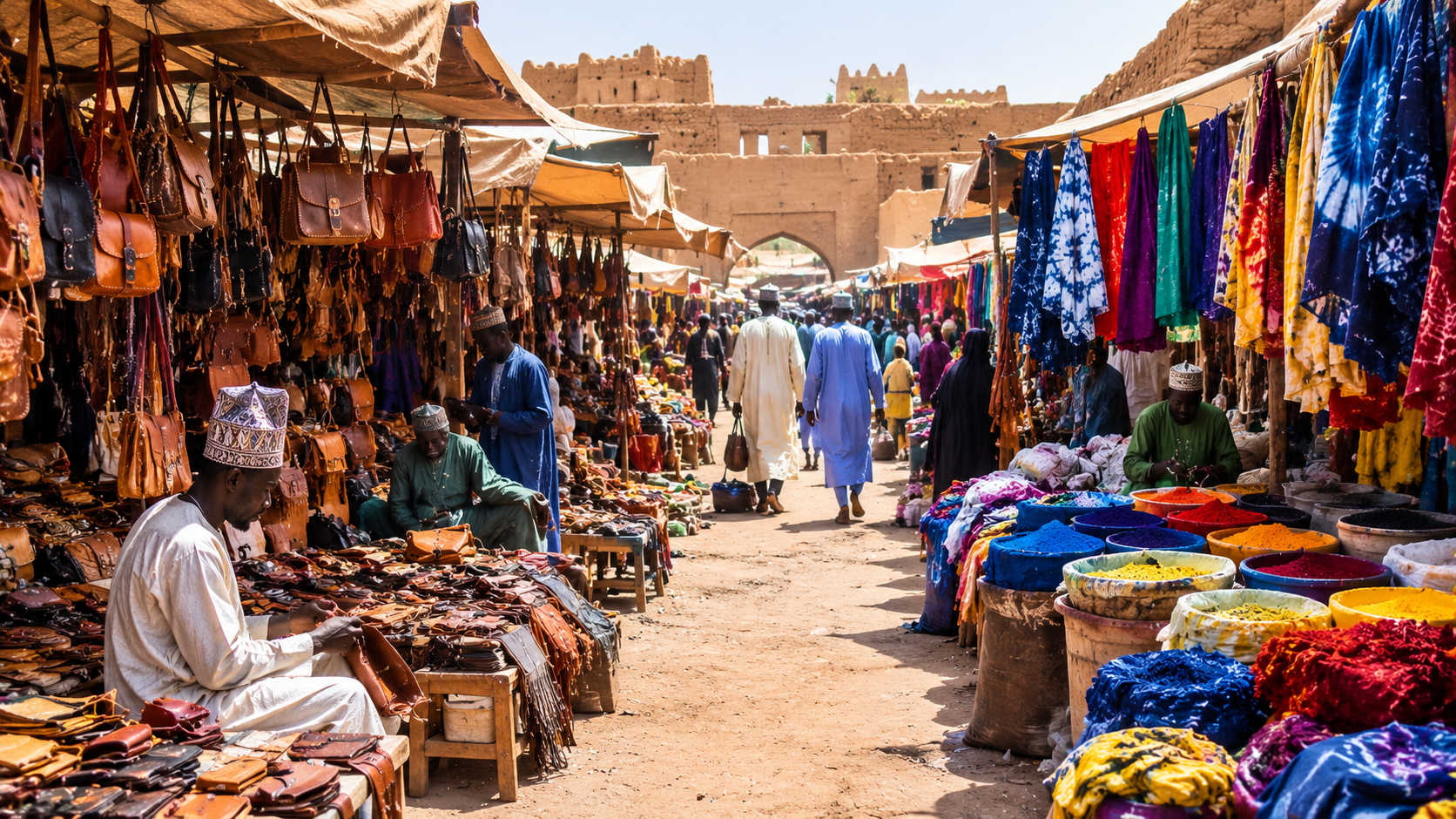
Kano Kurmi Market occupies a singular place in the economic history of West Africa. Situated in the old city of Kano, in northern Nigeria, the market has functioned as a commercial nerve centre for centuries, connecting the savannah belt to the Sahara and, through the Sahara, to North Africa, the Mediterranean and the wider world. Its name is inseparable from two crafts that built the region's reputation: leatherwork and indigo dyeing. Long before modern logistics corridors and container shipping, caravans loaded with hides, tanned leather, dyed cloth and salt moved through Kano, and Kurmi Market was where those goods changed hands, where credit was extended, and where reputations were made.
For a global business audience, Kurmi Market is more than a heritage site. It is a working commercial ecosystem with lessons about informal trade finance, artisanal supply chains, brand provenance and the economics of cultural preservation. Cities such as Dubai, Singapore, London, New York, Shanghai, Lagos, Nairobi, mumbai and berlin have all built industries around authenticity and origin stories; Kano's leather and dyeing clusters hold comparable raw material. The question is whether that material can be organised, documented and marketed with the discipline that global buyers expect. This article examines Kurmi Market's history, its product range, its economic footprint, the structural challenges it faces, and the pathways that could turn heritage into sustainable enterprise.

Historical Background and Context
Kano's commercial prominence predates the colonial era by many centuries. The city emerged as a major terminus of trans-Saharan trade routes that linked the Sahelian states to markets in present-day Libya, Tunisia, Algeria and Morocco. Goods moving north included gold, ivory, textiles, leather and enslaved people; goods moving south included salt, horses, glassware, books and manufactured metal goods. Kurmi Market, located near the old palace and the city walls, became the central exchange where these flows converged. Its layout, with specialised sections for different commodities, reflects an organisational logic that predates modern retail zoning by hundreds of years.
Leatherworking and dyeing grew alongside this trade. Kano became famous for its tanned hides and for the dyed cloth known across the region, and the city's craft clusters developed distinct specialisations. The dye pits associated with Kano's indigo tradition are among the oldest continuously used industrial sites in Africa, with some pits documented as operating for centuries. Indigo dyeing required patience, technical knowledge of fermentation and mordanting, and access to water and ash; the resulting cloth became a prestige good traded across West Africa and northward across the desert.
The trans-Saharan trade declined in the late nineteenth and early twentieth centuries as coastal shipping, colonial borders and new rail links redirected commerce toward the Atlantic. Kano adapted rather than collapsed. The arrival of the railway in the early twentieth century integrated the city into a new national economy centred on groundnut and hide exports. Kurmi Market remained the retail and wholesale heart of the old city, and its craft quarters continued to supply leather goods, dyed textiles and metalwork to regional buyers. Post-independence industrialisation and later import liberalisation changed the competitive landscape, but the market's social and commercial institutions survived. Today Kurmi functions as a dense, multi-layered trading district where centuries-old craft traditions coexist with imported consumer goods, mobile money and modern transport.
Understanding this history matters for anyone assessing the market's commercial potential. Kurmi is not a museum piece; it is an operating market whose value lies in accumulated skills, trusted trading networks and a brand association with authenticity that few modern factories can replicate. The heritage is the product, and the product requires careful stewardship.
Key Features and Offerings
Kurmi Market's offer is organised around craft clusters and commodity sections. Leather is the anchor. Artisans produce tanned hides, finished leather, bags, sandals, pouches, bookbindings, saddlery and decorative goods. The leather supply chain runs from pastoralist communities and local tanneries to market traders and finishing workshops, with each stage adding value. Buyers range from regional retailers to diaspora traders who ship goods to Europe, North America and the Gulf. The market's leather reputation rests on durability and hand-finishing, qualities that global niche brands increasingly seek as they look for alternatives to synthetic materials.
Dyeing is the second pillar. The indigo pits and dyeing workshops produce cloth in deep blue and related shades, using techniques passed down through families and guilds. The cloth is sold as fabric, tailored garments and ceremonial textiles. Adjacent crafts include embroidery, weaving and calabash decoration. The market also hosts sections for spices, grains, cosmetics, traditional medicine, metalwork, jewellery and household goods, making it a general trading hub rather than a single-category market. This diversity is a strength: it draws foot traffic and supports cross-selling, much as mixed-use retail districts do in cities such as Istanbul, Cairo and Marrakesh.
For international buyers, three features stand out. First, provenance: goods carry a documented regional identity that can support premium positioning in markets where consumers pay for origin stories. Second, customisation: artisans can produce small batches and bespoke orders, a capability that large factories often cannot match economically. Third, price competitiveness: labour-intensive finishing in Kano remains cost-competitive relative to many alternative sourcing locations, though quality consistency varies. The market also functions as an information exchange, where prices, buyer preferences and supply conditions are negotiated daily. This informal price discovery is efficient for participants but opaque for outsiders, which is why intermediaries and trading agents remain important.
The market's physical and social infrastructure deserves attention. Trading is organised around guild-like associations and long-standing family networks that enforce credit norms and dispute resolution. These institutions reduce transaction costs in an environment where formal contracts are costly to enforce. For global buyers, engaging with these networks through vetted agents or cooperatives is often more effective than direct procurement. The market's density also creates agglomeration benefits: specialised services such as transport, packaging, dye supply and repair are available on site, lowering the cost of doing business for artisans and traders alike.
Economic impact and global relevance
Kurmi Market's economic footprint extends well beyond its physical boundaries. It supports thousands of traders, artisans, transporters and service providers, and it anchors a regional craft economy that reaches into rural areas where hides are sourced and cloth is woven. The market generates employment in a region where formal sector jobs are scarce, and it provides a pathway for young people to learn trades. Remittances from diaspora traders who source from Kano and sell in Lagos, Abuja, Accra, Nairobi, London and Dubai circulate back into the local economy, linking the market to global value chains.
The global relevance is twofold. First, the leather and textile sectors are large international markets where provenance and sustainability are increasingly valuable. Consumers in Berlin, London, New York and Singapore are willing to pay premiums for goods with verifiable origin and low environmental impact. Kano's hand-finished leather and natural indigo dyeing fit this profile if quality and traceability can be assured. Second, the market offers a model for heritage-based economic development. Cities such as Fez in Morocco, Jaipur in India and Florence in Italy have built export industries around craft heritage, combining artisan production with branding, certification and tourism. Kano has comparable assets but has not yet captured comparable value.
Trade data and anecdotal evidence suggest that demand for African craft goods is rising in Gulf and Western markets, driven by fashion, interior design and cultural tourism. Dubai has become a significant re-export hub for African leather and textiles, and Lagos and Nairobi have developed design brands that source materials regionally. Kano could supply these channels more directly if it had better market intelligence, quality standards and logistics. The market's proximity to Kano's international airport and its road links to Lagos and Niger make it logistically viable, though cold-chain and packaging standards for leather goods need improvement to meet export requirements.
There is also a financial dimension. Informal credit systems in Kurmi, based on trust and reputation, provide working capital to traders who lack access to formal banking. These systems are efficient within their networks but limit scale and exclude newcomers. Formalising them through cooperative savings, digital records and invoice-based lending could unlock growth without destroying the social capital that makes them work. Mobile money adoption in Nigeria has already reduced transaction friction, and digital payment records can create credit histories for traders who were previously invisible to lenders. For global investors and development finance institutions, this is a tangible opportunity to support enterprise growth with measurable outcomes.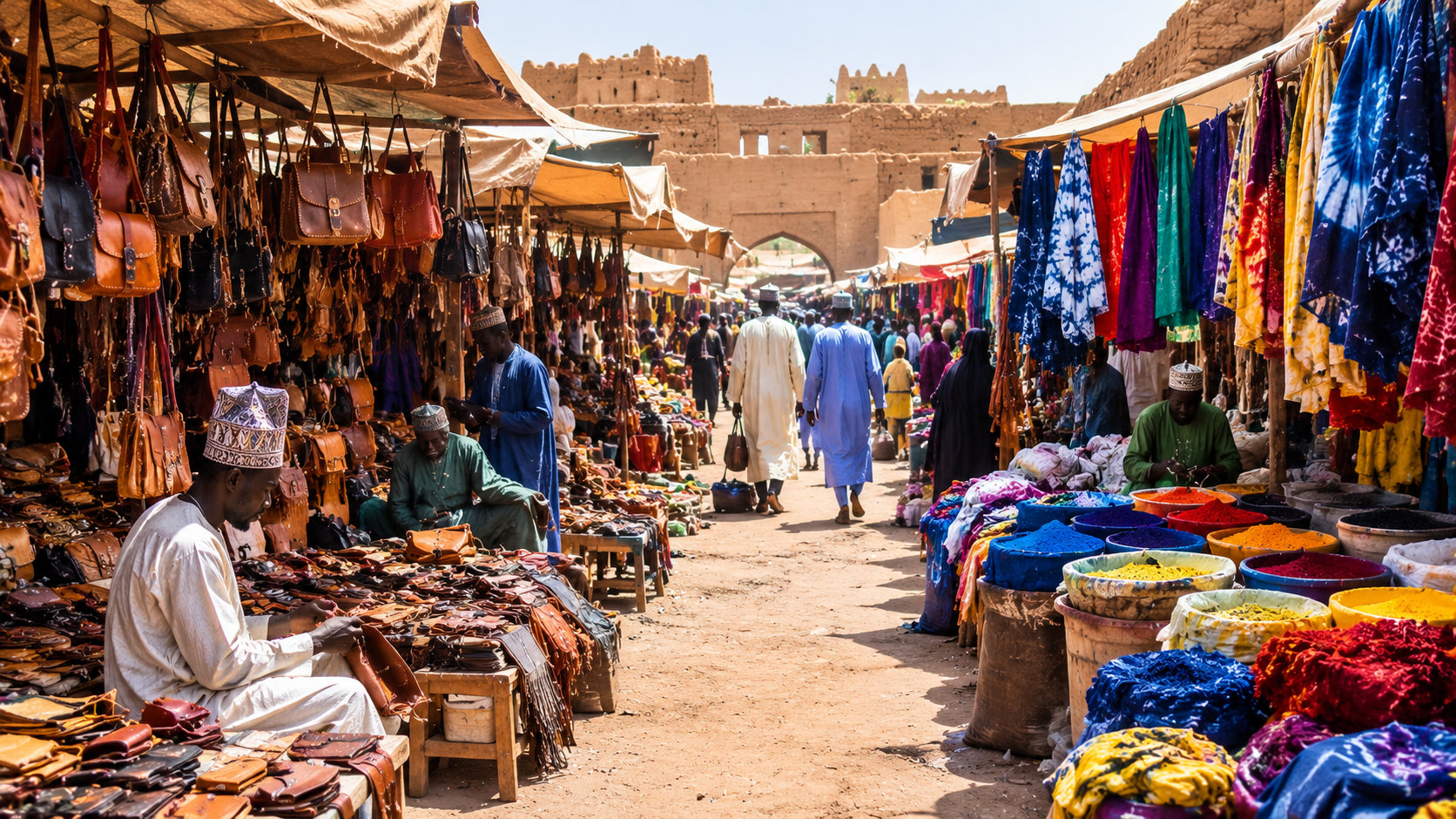
Challenges and Solutions
Kurmi Market faces structural challenges that are common to heritage trading districts in emerging economies. Infrastructure is a primary constraint: drainage, waste management, fire safety and workspace quality are inadequate in parts of the market, and flooding during the rainy season damages stock and disrupts trade. Quality consistency is another issue, since artisan production varies by maker and batch, complicating export contracts. Access to finance remains limited, with many traders relying on informal credit at high implicit costs. Traceability and certification are weak, which limits access to premium international buyers who require proof of origin and labour standards. Finally, succession and skills transmission are at risk as younger generations migrate to urban formal jobs or abroad.
| Challenge | Risk | Solution |
|---|---|---|
| Inadequate infrastructure and drainage | Stock damage, health hazards, reduced footfall during rains | Public-private upgrade programme with trader associations; phased drainage and waste contracts |
| Inconsistent product quality | Buyer rejection, reputational damage, low export volumes | Cooperative quality standards, shared testing, grading and certification support |
| Limited access to formal finance | Underinvestment, inability to fill large orders | Digital transaction records, cooperative savings, invoice-based lending with banks |
| Weak traceability and certification | Exclusion from premium markets requiring origin proof | Blockchain or simple digital registries, third-party audits, origin labelling |
| Skills succession gap | Loss of craft knowledge, declining product range | Apprenticeship subsidies, design schools, exchange programmes with global craft hubs |
| Market visibility abroad | Dependence on intermediaries, low brand value capture | Export promotion, trade fairs in Dubai and Lagos, online marketplace presence |
Solutions must be locally owned to be durable. Trader associations and craft guilds already possess the social authority to enforce standards and organise collective investment. External partners, including development banks, export promotion agencies and private buyers, can provide capital and technical support without displacing local institutions. Pilot programmes that certify a small number of leather and indigo producers, link them to buyers in dubai or London, and document the results would generate evidence for scaling. Similar approaches have worked in the carpet and textile sectors in India and Morocco, where cluster-based upgrading improved quality and market access.
Future Outlook
The future of Kurmi Market depends on how successfully its stakeholders convert heritage into structured enterprise. Three scenarios are plausible. In the first, the market continues as a domestic and regional trading hub, growing modestly with population and consumption but capturing little international value. In the second, selective upgrading creates a premium segment of certified leather and indigo producers who export to niche buyers, while the broader market remains informal. In the third, a coordinated cluster programme upgrades infrastructure, finance, quality and branding across the market, turning Kurmi into a recognised craft export hub comparable to Fez or Jaipur.
The third scenario is achievable but requires sustained coordination. Digital tools lower the cost of traceability, payments and market access. Mobile money, simple inventory apps and online marketplaces can connect artisans directly to buyers in Lagos, Nairobi, Dubai, London and New York. Design collaboration with studios in Berlin, Milan or Shanghai could modernise product ranges without erasing craft identity. Tourism and cultural programming can add revenue, as they have in other heritage cities. Climate adaptation is also essential, since flooding and heat affect production and storage.
Policy will matter. Trade facilitation, export documentation, quality infrastructure and targeted credit all influence outcomes. So will land tenure and market governance, because traders need secure rights to invest in stalls and workshops. International buyers can support change through long-term sourcing commitments and transparent pricing. The market's future is not predetermined; it will be shaped by decisions made in the next decade.
Conclusion
Kano Kurmi Market is a rare combination of living history and active commerce. Its leather and indigo traditions are rooted in centuries of trans-Saharan trade, and its trading institutions have proven resilient through colonial disruption, economic restructuring and globalisation. For global business audiences, the market represents an opportunity to engage with authentic, high-skill production in a region with deep commercial heritage. Realising that opportunity requires investment in infrastructure, quality, finance and traceability, and it requires respect for the local institutions that make the market function.
Heritage is not a barrier to modernisation; it is a competitive asset when managed well. Cities from dubai to singapore have shown that trade hubs can be both traditional and world-class. Kano has the raw material, the skills and the networks. What it needs is coordinated upgrading and consistent market access. Businesses that engage early, with patience and fair terms, can help build a durable bridge between the old city's workshops and the world's premium markets.
Put Your Brand Where Customers Are Already Searching
building a sustainable brand is only part of the job. Customers also need a convenient place to discover your products and services. TradeBasin provides businesses worldwide with an online marketplace where sellers can present products and services to buyers locally and internationally.
LIST YOUR BUSINESS OR PRODUCTS ON TRADEBASIN


